25 February, 2026
VISI-ON-BRAIN Project (NAMs)
UNIVERSITAT DE BARCELONA LAUNCHES VISI-ON-BRAIN, A €4.5M HORIZON EUROPE DOCTORAL NETWORK ADVANCING HUMAN-RELEVANT NEUROSCIENCE TOOLS BEYOND ANIMAL MODELS
- Project coordinated by the University of Barcelona through Creatio – the Production and Validation Center of Advanced Therapies
Barcelona, 25 February 2026 — Universitat de Barcelona today announced the launch of VISI-ON-BRAIN (Cutting-edge Human In Vitro and In Silico Biomedical Tools on Brain Disorders), a Horizon Europe project funded with over €4.5 million under the Marie Skłodowska-Curie Actions – Doctoral Networks (MSCA-DN). Over 48 months (2026–2029), the consortium will train 15 doctoral researchers to develop and apply next-generation human in vitro and in silico approaches for complex brain disorders, including Alzheimer’s, Parkinson’s, and Huntington’s disease.
The project arrives as biomedical R&D and policy shift decisively toward innovation without animal use and toward human-relevant, mechanistically anchored evidence, driven by concerns about translation, cost, and late-stage clinical attrition. In Europe, this includes a Commission Roadmap to phase out animal testing in chemical safety assessments and Parliament calls to accelerate the transition with clearer objectives and timelines. In the United States, the FDA has outlined a stepwise plan to reduce animal testing in preclinical safety studies and expand New Approach Methodologies (NAMs), including computational and advanced in vitro systems.
Neuroscience makes this transition mission-critical: neurodegenerative therapeutic agents development has seen exceptionally high failure rates, underscoring the need for models that better reflect human biology and disease trajectories. The EU’s broader competitiveness push—via the Commission’s Strategy for European Life Sciences (“Choose Europe for life sciences”) and the European Biotech Act—reinforces this direction by strengthening translation from lab to market, boosting innovation uptake, and accelerating pathways from research to real-world impact.
VISI-ON-BRAIN is designed to close the translational gap by building an integrated pipeline of predictive, reproducible, clinically anchored experimental and computational tools, while training researchers who can operate at the interface of biology, data, engineering and regulatory relevance.
A pan-European, intersectoral training and research platform
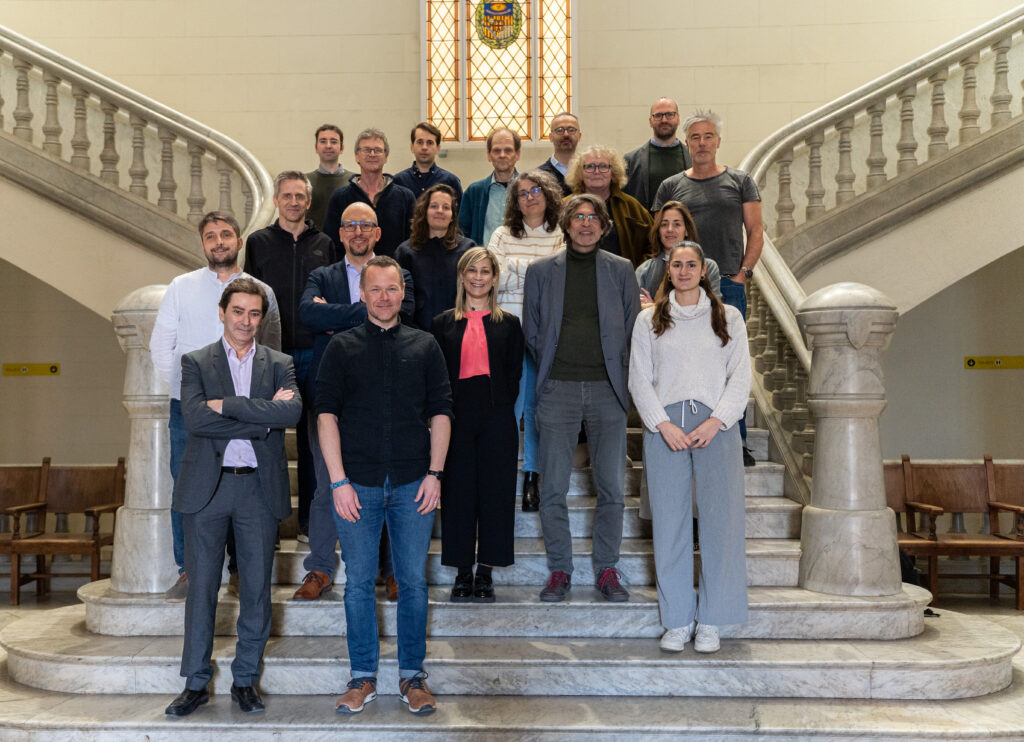
The programme brings together 15 academic, clinical, and industrial partners across eight European countries, enabling doctoral researchers to combine wet-lab innovation with advanced modeling, analytics, and translational validation. The project is coordinated by the University of Barcelona through Creatio – Production and Validation Center of Advanced Therapies (Spain). The beneficiary consortium includes: Danmarks Tekniske Universitet (Denmark), Prinses Máxima Centrum voor Kinderoncologie (Netherlands), Eberhard Karls Universität Tübingen (Germany), Lunds Universitet (Sweden), Cardiff University and King’s College London (United Kingdom), Consiglio Nazionale delle Ricerche (Italy), Starlab Barcelona SL (Spain) and FRESCI (Spain). Associated partners are: Università degli Studi di Milano-Bicocca (Italy), Utrecht University (Netherlands), VERIGRAFT AB (Sweden), Ospedale San Raffaele SRL (Italy), and the European Commission Joint Research Centre (Italy).
Why it matters: from “more data” to “better evidence.”
Brain disorders are a major global health challenge and a substantial societal and economic burden. VISI-ON-BRAIN will accelerate human-relevant, decision-grade tools that enable earlier, more reliable go/no-go decisions, de-risk translation, and improve the efficiency of therapeutic discovery and development. Beyond the science, it is a workforce and competitiveness investment—training doctoral researchers who can move easily between academia, clinical research, and industry, helping scale NAMs from promising methods to validated, deployable practice aligned with evolving regulatory expectations.
Funded by the European Union under the Marie Skłodowska-Curie grant agreement N. 101227124. Views and opinions expressed are however those of the author(s) only and do not necessarily reflect those of the European Union. Neither the European Union nor the granting authority can be held responsible for them.

