
26-09-2025
SPIDERWEBAT: Spider webs as a tool to protect bats. (PR-IRBio 2025 Grant)
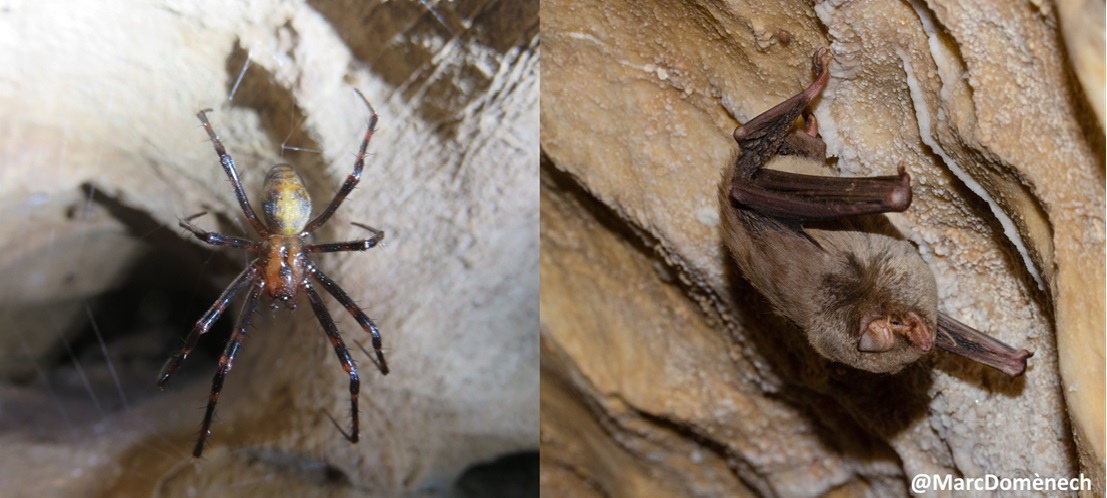
Bats are a highly diverse and ecologically important group of mammals. Unfortunately, many bat species are classified as threatened. Underground habitats are essential in the life cycle of many bat species, and therefore it is important to protect them. However, it is often difficult to monitor the species present in a cave, and usually involves risky and invasive methods that disturb them.
The SPIDERWEBAT project, led by Marc Domènech and funded by the PR-IRBio 2025 grant, proposes an innovative and minimally invasive method to monitor cave bats by applying genomic techniques to spider webs.
Interdisciplinary research
The project starts this November, which will develop an innovative protocol using the metabarcoding technique for a year to analyze the eDNA accumulated in cave spider webs with the aim of identifying bat species and monitoring their populations. This initiative combines molecular biology and ecology to create an efficient and non-invasive tool for monitoring underground biodiversity, with special attention to bats, key species in these ecosystems.
The SPIDERWEBAT project stands out for being the first to bring together arachnologists trained in genomic techniques for the study of biodiversity (Marc Domènech and Alba Enguídanos) and specialists in bats and ecoepidemiology, the relationship between bats and emerging zoonoses (Marc López, Jordi Serra and Abir Monastiri). The taxonomy of both bats and spiders is a complex field that requires years of training and experience, and the collaboration of these teams, with knowledge in genetics, ecology and speleology, represents a unique opportunity for a far-reaching interdisciplinary project.
Spider webs as environmental DNA traps
The use of spider webs as a source of eDNA is a highly original proposal, the coexistence of bats and spiders in caves is well known, since they act as natural filters that capture organic remains from the environment, such as hair or feces. In addition, since the entrances to caves and other underground habitats are usually narrow, this filtering effect of spider webs is reinforced compared to spider webs in open spaces. Spider webs can be easily collected without causing significant discomfort to bats, whether they are abandoned or active webs (in the latter case, the spider can later rebuild the web). This offers a sustainable and ethical alternative to traditional methods, such as direct capture of bats or guano collection, which can be invasive and stressful for the animals.
One of the most relevant aspects of the project is its applicability in biodiversity conservation. Bats are crucial ecological indicators, as their populations reflect the health of ecosystems. Identifying the species present in a cave and determining their role in the biological cycle will allow managers and conservation policy makers to make more informed decisions to protect them, especially in the face of growing threats such as climate change, habitat loss and emerging diseases.
With this project, IRBio reaffirms its commitment to innovative research and biodiversity conservation, supporting initiatives that unite disciplines and generate new knowledge to address current environmental challenges.
The SPIDERWEBAT project, led by Marc Domènech and funded by the PR-IRBio 2025 grant, proposes an innovative and minimally invasive method to monitor cave bats by applying genomic techniques to spider webs.
Interdisciplinary research
The project starts this November, which will develop an innovative protocol using the metabarcoding technique for a year to analyze the eDNA accumulated in cave spider webs with the aim of identifying bat species and monitoring their populations. This initiative combines molecular biology and ecology to create an efficient and non-invasive tool for monitoring underground biodiversity, with special attention to bats, key species in these ecosystems.
The SPIDERWEBAT project stands out for being the first to bring together arachnologists trained in genomic techniques for the study of biodiversity (Marc Domènech and Alba Enguídanos) and specialists in bats and ecoepidemiology, the relationship between bats and emerging zoonoses (Marc López, Jordi Serra and Abir Monastiri). The taxonomy of both bats and spiders is a complex field that requires years of training and experience, and the collaboration of these teams, with knowledge in genetics, ecology and speleology, represents a unique opportunity for a far-reaching interdisciplinary project.
Spider webs as environmental DNA traps
The use of spider webs as a source of eDNA is a highly original proposal, the coexistence of bats and spiders in caves is well known, since they act as natural filters that capture organic remains from the environment, such as hair or feces. In addition, since the entrances to caves and other underground habitats are usually narrow, this filtering effect of spider webs is reinforced compared to spider webs in open spaces. Spider webs can be easily collected without causing significant discomfort to bats, whether they are abandoned or active webs (in the latter case, the spider can later rebuild the web). This offers a sustainable and ethical alternative to traditional methods, such as direct capture of bats or guano collection, which can be invasive and stressful for the animals.
One of the most relevant aspects of the project is its applicability in biodiversity conservation. Bats are crucial ecological indicators, as their populations reflect the health of ecosystems. Identifying the species present in a cave and determining their role in the biological cycle will allow managers and conservation policy makers to make more informed decisions to protect them, especially in the face of growing threats such as climate change, habitat loss and emerging diseases.
With this project, IRBio reaffirms its commitment to innovative research and biodiversity conservation, supporting initiatives that unite disciplines and generate new knowledge to address current environmental challenges.