
Our Research

Our team is interested in understanding the molecular mechanisms that control the interaction between pathogenic bacteria and plants to develop sustainable strategies to prevent and fight bacterial invasions in the field.

Genetic Determinants of Bacterial Wilt

Bacterial wilt caused by the wide-host range pathogen Ralstonia solanacearum is a devastating disease affecting over 200 plant species from disparate families including potato, tomato, peanut, and eucalyptus. Management of this disease remains difficult due to the pathogen's aggressiveness, broad geographical distribution, and long persistence in soil and water.

We study the R. solanacearum genes that are essential for its life cycle both inside and outside its plant hosts. These include genes that control bacterial virulence and the functions required for its long-term survival in the environment. We expect to identify key bacterial determinants that can be used as targets to control the disease.
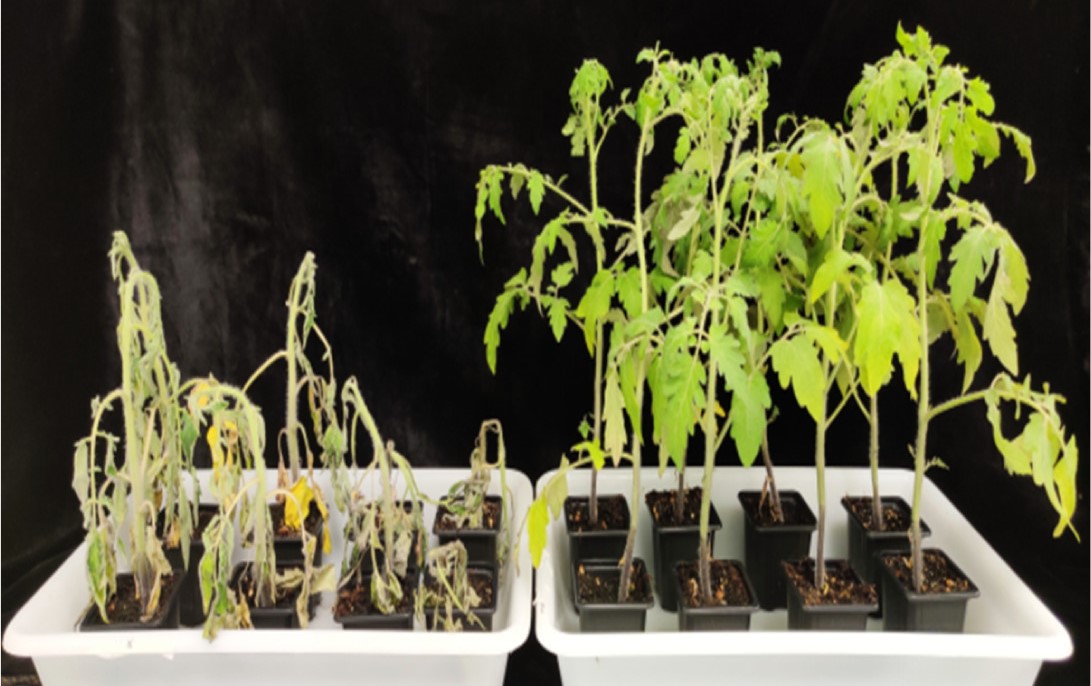
Tomato plants showing symptoms of bacterial wilt disease.

Plant Defense Responses to Bacterial Invasion

Resistance to R. solanacearum is multigenic and regulated by very complex characters. In the lab, we study the mechanisms underlying inducible physico-chemical barriers posed by resistant plants to R. solanacearum as well as the protease complement involved in neutralizing the bacterium in the apoplast and xylem of infected plants.

We also study the mechanisms regulating the hypersensitive response in plants, in particular the role of the metacaspase AtMC1 as a cell death protease and a proteostasis regulator.