
Research
My research focus on how the human brain builds the auditory world around us to give rise to auditory perception. A major topic are the neural mechanisms to model the statistic regularities in the acoustic environment supporting predictive perception. Also, we’ve gained interest into the neural encoding of complex sounds, such as speech and music, as critical prerequisite for human communication, and how this neural encoding evolves during early development. The results of this research support the emerging view that the subcortical auditory system has complex computation capabilities contributing to auditory cognition, in tight interplay with the entire auditory hierarchy.
Current projects
Neural encoding of speech sound features in newborns and infants
Funding: MICINN PGC2018-094765-B-I00; Fundación Alicia Koplowitz (call 2020); Carmen de Torres fellowship (IRSJD 2020).
Using the frequency-following response (FFR), a brain potential correlate of neural phase-locking to complex sounds, this project aims at characterizing how speech sound features (voice pitch and temporal fine structure associated to speech formants) are encoded in the neonatal brain. The project also investigates how clinical conditions challenging fetal development, such as fetal growth restriction and prenatal exposure to alcohol, syphilis (in collaboration with Prof. Sheila Balen, Natal, Brazil) and impoverished (noisy) environments (with Dr. Amineh Koravand, Ottawa, Canada) impact the neural encoding of speech during early development.
Team
-
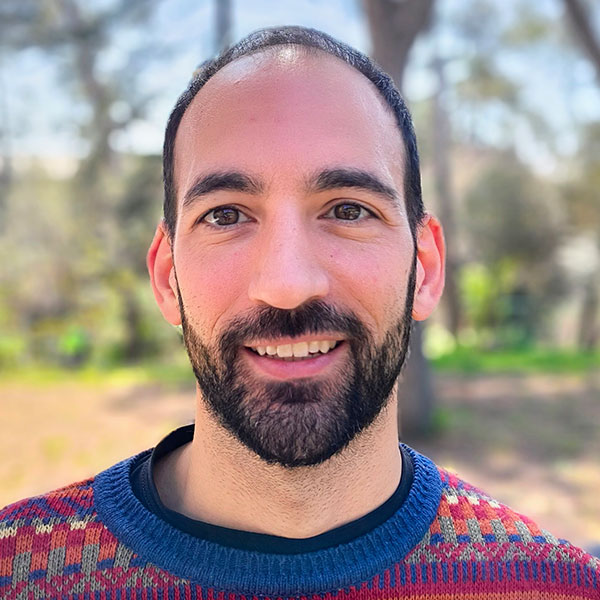 Jordi Costa FaidellaAssociate Professor
 -
 Natàlia Gorina CaretaSenior postdoc
 -
 Teresa Ribas PratsSenior postdoc
 -
 Sonia Arenillas AlcónSenior postdoc
 -
 Alejandro Mondéjar-SegoviaEarly Stage Researcher
PhD theses (defended)
-
Teresa Ribas PratsSenior postdoc
-
Sonia Arenillas AlcónSenior postdoc
Developmental trajectories and neuroanatomical underpinnings of brain responses to speech sounds during the first two years of life
Funding: MICINN PID2021-122255NB-100.
A second step towards understanding the neural encoding of speech sound features in the infant brain was established to investigate neuroanatomical underpinning and natural development during the first two years of age. We obtained neurosonographic images on the fetal brain (32 weeks of gestational age) as well MRI scans (both volumetric and diffusion) in infants at birth and at the age of 6 months to characterize the relationship between major anatomical structures involved in auditory and speech processing and the neural signatures of encoding of speech sounds (frequency-following response parameters). We found that the corpus callosum, its Witelson subdivisions and the ascending auditory pathway is clearly involved. Also, we follow up neonates at 6, 12 and 21 months of age to discover a milostene in early speech encoding -the emergence of ability to track the speech formats by the age of 6 months (Puertollano et al., 2024)
Team



PhD theses (defended)
The impact and scope of music-induced neural plasticity across early language acquisition
Funding: Fundaçao Bial (call 2024)
Inspired by our incidental observation that neonates that were exposed to music during the last trimester of pregnancy (i.e., their mothers listening to music through loudspeakers on a daily basis) had enhanced neural phase locking to the speech fundamental frequency (compared to non-exposed babies; Arenillas-Alcón et al., 2023), we set to investigate this on a systematic fashion through a control trial. We will systematically investigate how passive exposure to music during pregnancy, and during early postnatal life, can induce plastic changes on a cascade of neural mechanisms supporting early language acquisition to boost language outcomes at the age of one year. Using a broad set of neurocognitive markers of auditory development, including FFR to test milestones in the neural encoding of formant structure of speech, mismatch negativity (MMN) to unveil the emergence of prototypic phonetic categories, and frequency-tagging analysis of EEG to probe the ability to detect non-adjacent dependencies in speech (i.e., statistical learning), we aim to understand the neurophysiological underpinnings of the beneficial effects of music exposure across early language acquisition.
Team

PhD theses (defended)
Knowledge transfer and innovation
The ONAkids project
Funding: MICINN PDC2022-133044-I00 project (MCIN/AEI/10.13039/501100011033 y por la Unión Europea “NextGeneration EU”/PRTR). Catalan Government (AGAUR) 2021LLAV00071 LLAVOR and 2023PROD00099 PRODUCTE programs. Fundació Bosch I Gimpera, Proof of Concept and Mentor in Residence programs. Biocat Craash Barcelona program.
Capitalizing on our ongoing research on the neural mechanisms of speech encoding and early language acquisition, we are striving to develop a product/service that can anticipate the risk of language delay (LD) on a neonatal Frequency-Following Response (FFR) recording as interpreted through an artificial intelligence (AI) algorithm.
LD affects 19% of children and is the leading cause of school failure, affecting the ability to read, write and socialize, and increasing the risk of anxiety and depression. Despite language development starts in the pre-natal period, LD is currently detected only after symptoms appear, around the age of two years, when the critical neurodevelopmental periods are already closed. Our project introduces the first and only test capable of detecting LD at birth, using biomarkers. By analyzing the FFR, a brain signal that reflects how an infant’s brain processes speech sounds, our predictive algorithm can determine, at birth, whether a child is at high risk of LD. The test is non-invasive, fast, and scalable, making it suitable for large-scale neonatal screening.
We have already filed a patent application and developed a portable, user-friendly FFR recording device, now in the prototyping phase. The next steps include validating the technology through a clinical study, achieving regulatory approval under MDR, and advancing our intellectual property protection strategy. In addition to our detecting device, we are currently developing a preventive intervention approach, allowing early therapeutic actions for at-risk children.








Collaborators
Prof. Kimmo Alho, University of Helsinki (Finland)
Prof. Manuel S. Malmierca, University of Salamanca (Spain)
Prof. Piia Astikainen, University of Jyväskylä (Finland)
Prof. Sheila Balen, Universidade Federal do Rio Grande do Norte (Brazil)
Prof. Marc Lammers, University of Antwerp (Belgium)
Prof. Mari Tervaniemi, University of Helsinki (Finland)
Dr. Amineh Koravand, Ottawa University (Canada)
Dr. Marie Gomot, INSERM, Tours (France)
Dr. Brigitta Toth, Hungarian Research Network (Hungary)
Dr. Emily Coffey, Concordia University (Montréal, Canada)
Selected publications
A list of publications is available in Web of Science and Google Scholar.