Additive Manufacturing

Artícle publicat en la revista Materials MDPI en col·laboració amb investigadors de la Universitat de Cantabria i de Technische Universität Wien: Additive Manufacturing Processes in Selected Corrosion Resistant Materials: A State of Knowledge Review.

Highlights

  • A full review article on the corrosion behaviour of additive manufacturing (AM) of metallic parts is presented with the aim of covering the significant lack of information on this subject.
  • Corrosion resistance of light metallic systems and duplex stainless steels objects obtained by additive manufacturing (AM) processes is critically discussed, based on the synergism between variables linked with chemical composition, manufacturing processes, and service conditions.
  • Methodologies for improving the corrosion resistance of metallic parts produced by additive manufacturing (AM) are highlighted.
  • The available data allow us to state that potentiodynamic corrosion tests are the best methodology to characterize metal additive manufacturing (MAM) corrosion and this unique test should be selected for the evaluation of this phenomenon. There is a gap in knowledge and test procedure to properly identify the relationship between defects and corrosion behaviour of the most studied metal additive manufacturing (MAM) systems.
Consulta-ho aquí:

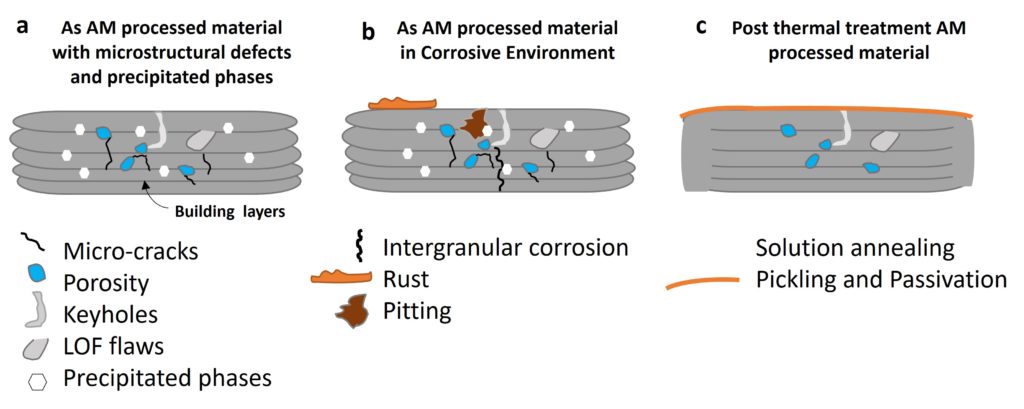
(a) Schematic representation of an AM-processed material and the presence of several microstructural defects (micro-cracks, porosity, keyholes, and LOF flows, as represented); (b) the same AM processed material in a corrosive environment where intergranular corrosion, pitting corrosion, and rust on the surface can appear; (c) the same AM-processed material after being thermally treated (solution annealing) to remove residual stresses and precipitated secondary phases after pickling and passivation as a preventive measure for corrosive environments.


Publicat dins de General | Deixa un comentari

Investigadors de la UB reben un ajut AGAUR-Llavor per desenvolupar un nou producte descontaminant de les aigües obtingut per impressió 3D

La Universitat de Barcelona, a través de la seva oficina de transferència de tecnologia i innovació, la Fundació Bosch i Gimpera, ha obtingut de l’AGAUR un ajut Llavor de 20.000 euros per desenvolupar un nou catalitzador descontaminant que es pot obtenir per impressió 3D i que és capaç d’eliminar de les aigües els colorants del tipus azo, un dels contaminants més freqüents. El projecte és liderat per la Dra. Núria Llorca-Isern, professora del Departament de Ciència de Materials i Química Física de la Facultat de Química de la UB.

L’activitat industrial humana ha donat lloc a una sèrie de nous contaminants, com ara microplàstics o compostos farmacèutics, que fan que les tecnologies emprades per eliminar-los es quedin cada vegada més obsoletes. Un grup d’aquests contaminants emergents són els colorants, i concretament els de tipus azo, que s’utilitzen en diferents indústries i a la vegada presenten una llarga durada en el medi natural.

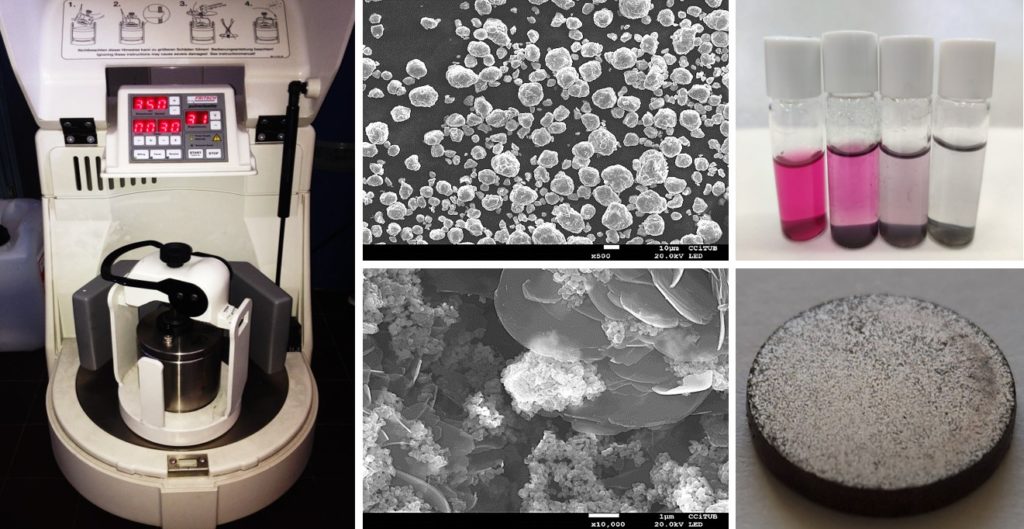
L’equip del projecte ha desenvolupat un nou catalitzador basat en aliatges d’alta entropia en forma de pols capaç de descompondre aquests colorants més ràpidament i de manera més econòmica que els sistemes convencionals. Per una banda, a diferència d’alguns catalitzadors comercials que estan formats per metalls nobles, els d’aliatges d’alta entropia seleccionats en aquest projecte són solucions sòlides de diferents metalls que permeten assegurar un excel·lent procés de descomposició combinat a un cost menor. I, per altra banda, el fet que sigui una reacció catalitzada permet eliminar amb gran eficiència, durabilitat i velocitat els contaminants i substituir altres mètodes que es basen en l’absorció. A més, l’estructura tridimensional d’aquest catalitzador es pot produir mitjançant una impressora 3D, fet que també permet abaratir-ne els costos de fabricació.

El projecte, amb número d’expedient 2021 LLAV 00081, ha rebut un ajut Indústria del Coneixement en la modalitat “Ajuts Llavor per a projectes innovadors amb potencial d’incorporació al sector productiu”.

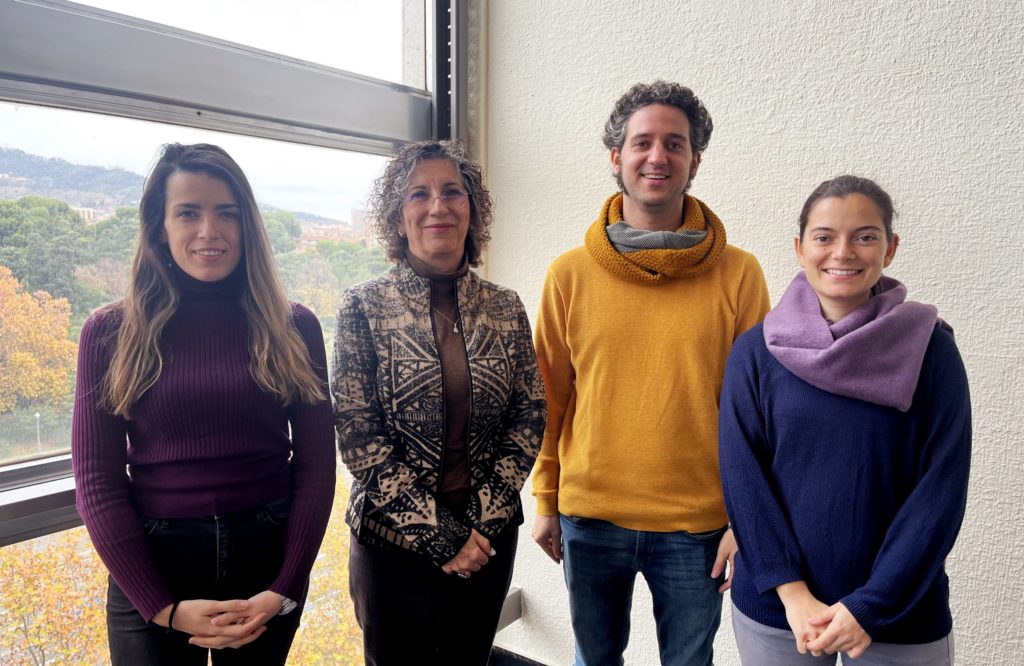
L’equip investigador del projecte CHEA3D (d’esquerra a dreta): Alisiya Biserova, Núria Llorca, Oriol Rius i Marina Carmona.
Publicat dins de General | Deixa un comentari

Article publicat a Chemosphere

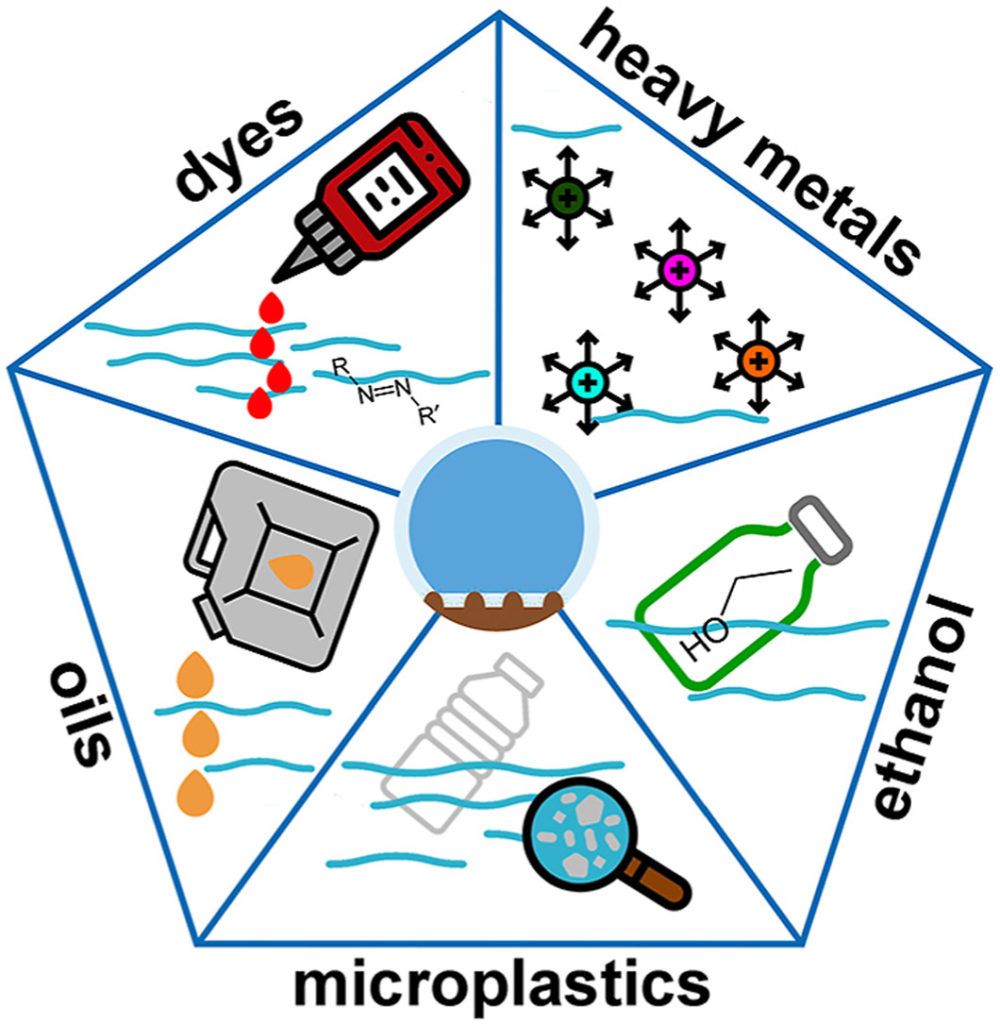
Recentment el grup ha publicat un review a la revista Chemosphere. Aquesta revisió mostra com els materials superhidrofòbics poden eliminar una gran varietat de contaminants emergents com ara els olis, metalls pesants, colorants, alcohols o bé microplàstics.

A continuació podeu llegir el resum de l’article o bé consultar-lo a la web.

A wide variety of pollutants can be currently found in water that are extremely difficult to remove due to their chemical composition and properties. A lot of effort has been made to tackle this issue that directly affects the environment. In this scenario, superhydrophobic surfaces, which have a water contact angle >150°, have emerged as an innovative technology that could be applied in different ways. Their environmental applications show promise in removing emerging pollutants from water. While the number of publications on superhydrophobic materials has remained largely unchanged since 2019, the number of articles on the environmental applications of superhydrophobic surfaces is still rising, corroborating the interest in this area. Herein, we briefly present the basis of superhydrophobicity and show the different materials that have been used to remove pollutants from water. We have identified five types of emerging pollutants that are efficiently removed by superhydrophobic materials: oils, microplastics, dyes, heavy metals, and ethanol. Finally, the future challenges of these applications are also discussed, considering the state of the art of the environmental applications of superhydrophobic materials.

Publicat dins de General | Deixa un comentari

Participació a 11th International Colloids Conference

Dels dies 12 a 15 juny, la Dra. Alisiya Biserova Tahchieva i el Dr. Oriol Rius Ayra van participar al congrés internacional 11th International Colloids Conference celebrat a la ciutat de Lisboa (Portugal). Durant aquests dies es van poder presentar els darrers treballs duts a terme pel grup de recerca CPCM en matèria de superfícies i interfases amb una presentació de pòster i una presentació oral.

Publicat dins de General | Deixa un comentari

Article publicat a Progress in Organic Coatings

Recentment el grup ha publicat els resultats de la recerca a la revista Progress in Organic Coatings com a resultat d’un Treball Final de Grau. Aquest article mostra com els materials superhidrofòbics poden eliminar amb una elevada eficiència dissolvents orgànics immiscibles (olis) i microplastics (HDPE).

A continuació podeu llegir el resum de l’article o bé consultar-lo a la web.

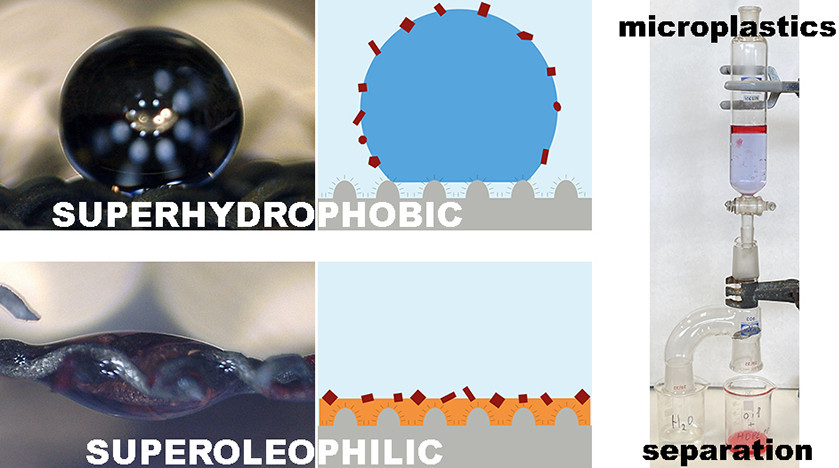
The use of microplastics is a global issue that affects the environment, the economy and human health. Here we describe a superhydrophobic 304 stainless steel obtained by combining chemical etching and PDMS modification. Among other techniques, field emission scanning electron microscopy (FE-SEM) and high-resolution X-ray photoelectron spectroscopy (HR-XPS) were used to identify the hierarchical structure as well as the chemical composition of the surface. The stainless-steel mesh was superhydrophobic (159°) and superoleophilic (0°). The coating presented high stability against abrasion of SiC abrasive paper as well as in the presence of different pH values in acidic or alkaline conditions. In addition, taking advantage of the coating’s wetting properties, we show that the superhydrophobic surface can also be used to remove high-density polyethylene microplastics from water. A surface mechanism promoting the removal or microplastics is also proposed, considering the surface properties of the solid pollutants as well as the wetting properties of the superhydrophobic coating.

Publicat dins de General | Deixa un comentari

Estades en el Laboratori de Recerca CPCM

Els grups de recerca de la Facultat de Química volen oferir a l’estudiantat dels seus graus la possibilitat de dur a terme estades de curta durada que suposin un primer contacte de l’estudiant amb el món de la recerca. En aquest sentit el grup de recerca CPCM ofereix la possibilitat de dur a terme una estada durant aquests mesos per poder iniciar-se en les línies de recerca pròpies del grup com són l’obtenció i caracerització de materials així com determinar les seves aplicacions ambientals. No dubtis en posar-te en contacte amb nosaltres.

Publicat dins de General | Deixa un comentari

Nou article publicat a Langmuir

Recentment el grup ha publicat els resultats de la recerca a la revista Langmuir com a resultat d’un Treball Final de Grau. Aquest article mostra com els materials superhidrofòbics poden eliminar amb una elevada eficiència dissolvents orgànics immiscibles (olis) i microplastics (HDPE).

A continuació podeu llegir el resum de l’article o bé consultar-lo a la web.

Microplastics are a global issue that affects the environment, economy, as well as human health. Herein, we present a superhydrophobic 304 stainless steel mesh obtained by chemical etching followed by a liquid-phase deposition of lauric acid that can be used for microplastic removal. Field emission scanning electron microscopy (FE-SEM) and high-resolution X-ray photoelectron spectroscopy (HR-XPS), among other techniques, were used to identify the hierarchical structure and chemical composition of the surface. They revealed that iron laurate decreased the surface free energy. The 304 stainless steel mesh was superhydrophobic (169°) and superoleophilic (0°). Taking advantage of these wetting properties, we showed an innovative use of these superhydrophobic surfaces in the removal of microplastics. Additionally, we analyzed the removal efficiency from a surface and colloidal point of view that allowed us to explain and clarify why microplastics can also be removed by their wetting properties. The loss of a double electrostatic cloud between the microplastics and the predominance of van der Waals interactions in the organic phase promote the removal of these persistent pollutants from water.

Publicat dins de General | Deixa un comentari

11th International Colloids Conference

El Dr. Oriol Rius Ayra i la Dra. Alisiya Biserova Tahchieva participaràn al congrés interntacional 11th International Colloids Conference duran els dies 12 – 15 de juny amb una presentació oral de joves investigadors sobre el paper que juguen els materials superhidrofòbics en l’eliminació de contaminants com els olis o bé els microplàstics.

Publicat dins de General | Deixa un comentari

Benvinguda

Benvinguts i benvingudes a la pagina web grup de recerca de Caracterització i Processos en Ciència de Materials de la Facultat de Química, Universitat de Barcelona.

Publicat dins de General | Deixa un comentari