
24-11-2025
Oil exploitation puts the health and territory of indigenous communities in the Amazon at risk
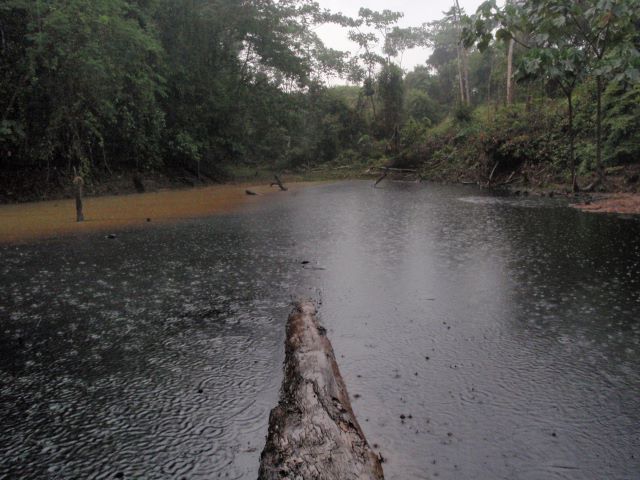
Pictures: GuillemRius
A study by the UB and ISGlobal warns of the impunity of large oil companies in the face of the serious environmental and health impact they cause on indigenous communities in Peru.
Coinciding with the celebration of COP30 in Belém, in the heart of the Brazilian Amazon, a new scientific study warns of the high levels of oil pollution suffered by indigenous communities in the region, as well as the impunity with which transnational companies that extract oil operate in the area. This is one of the regions with the most biodiversity on the planet and is key to the global fight against climate change.
The research, published in the journal Energy Research and Social Science, is led by the University of Barcelona and the Barcelona Institute for Global Health (ISGLOBAL), with the collaboration of the International Institute for Social Studies (ISS) of Erasmus University Rotterdam (Netherlands). The study focused on oil blocks 1AB/192 and 8, in the northern Peruvian Amazon, and analyzed data on environmental impacts linked to oil extraction, collected through indigenous environmental monitoring and records from Peru’s environmental agency between 2008 and 2018.
From impunity to reduced penalties
The study documents 1,184 environmental impacts, such as oil spills and discharges of polluting production water. Of the total number of impacts, the state agency has only registered 52%. “This shows a systematic gap between what happens in the territory and what the state officially recognizes,” says Martí Orta, from the Faculty of Biology and the Biodiversity Research Institute (IRBio-UB) of the University of Barcelona and corresponding author of the study.
Only 34% of the impacts generated by companies are monitored on site by the authorities, often with a delay of months or years, and only 17% end in sanctions. Even when these are imposed, fines are usually reduced or annulled through appeals and prolonged legal processes. “Transnational oil companies, based in the Global North, operate with structural impunity in remote territories such as the Amazon, where the state’s capacity for control is limited. Furthermore, legal frameworks favor the postponement and reduction of sanctions, while the damage to health and the territory persists,” says the lead author of the article Guillem Rius, from the Barcelona Institute for Global Health (ISGLOBAL) and the Department of Evolutionary Biology, Ecology and Environmental Sciences of the UB.
Between 2008 and 2018, the operating companies received fines of 30.61 million dollars in the two oil blocks studied, a figure that contrasts with the 437 million profits declared in 2018 alone by the shareholder group of Pluspetrol, the main operating company in the area. Despite the sanctions, many of the measures to restore the serious environmental impacts that the Peruvian state imposes on companies are not implemented. In addition, when the end of their contracts approaches, companies resort to corporate liquidation strategies to practically disappear from the map and evade legal responsibilities.
The value of indigenous communities in environmental monitoring
The study indicates that to stop these abuses, it is necessary to strengthen environmental monitoring, provide more resources to public agencies in countries like Peru and integrate local indigenous monitoring - much more effective and knowledgeable about the territory - into the environmental monitoring network.
It also proposes fines adjusted to the profits obtained by companies, so that pollution is no longer profitable for the industrial sector, and the revocation of licenses in cases of repeat offenses. The authors go further and question the continuity of fossil fuel extraction at a global level in the face of the current climate emergency, and especially in areas of high ecological and social value, as they also defend in another communication now published in the journal Nature.
"In territories like the Amazon, where the benefits of extraction do not translate into local well-being and affect key ecosystems, it is a priority to leave oil reserves unexploited," says Gorka Muñoa, postdoctoral researcher at UB-IRBio.
Finally, the study emphasizes that reviewing international investment treaties is essential to end the current corporate impunity of companies like Pluspetrol. The authors also propose, among other measures, including ecocide in the Rome Statute so that the International Criminal Court can criminally prosecute companies and executives responsible for serious environmental damage.
Reference article:
Rius-Taberner, Guillem; Pellegrini, Lorenzo; Muñoa, Gorka; Orta-Martínez, Martí. «When oil companies race to the bottom: Environmental enforcement in theory and corporate impunity in practice in the Peruvian Amazon». Energy Research and Social Science, November 2025. DOI: 10.1016/j.erss.2025.104433
Source:PremsaUB, FECONACOR, FEDIQUEP, OPIKAFPE.
A study by the UB and ISGlobal warns of the impunity of large oil companies in the face of the serious environmental and health impact they cause on indigenous communities in Peru.
Coinciding with the celebration of COP30 in Belém, in the heart of the Brazilian Amazon, a new scientific study warns of the high levels of oil pollution suffered by indigenous communities in the region, as well as the impunity with which transnational companies that extract oil operate in the area. This is one of the regions with the most biodiversity on the planet and is key to the global fight against climate change.
The research, published in the journal Energy Research and Social Science, is led by the University of Barcelona and the Barcelona Institute for Global Health (ISGLOBAL), with the collaboration of the International Institute for Social Studies (ISS) of Erasmus University Rotterdam (Netherlands). The study focused on oil blocks 1AB/192 and 8, in the northern Peruvian Amazon, and analyzed data on environmental impacts linked to oil extraction, collected through indigenous environmental monitoring and records from Peru’s environmental agency between 2008 and 2018.
From impunity to reduced penalties
The study documents 1,184 environmental impacts, such as oil spills and discharges of polluting production water. Of the total number of impacts, the state agency has only registered 52%. “This shows a systematic gap between what happens in the territory and what the state officially recognizes,” says Martí Orta, from the Faculty of Biology and the Biodiversity Research Institute (IRBio-UB) of the University of Barcelona and corresponding author of the study.
Only 34% of the impacts generated by companies are monitored on site by the authorities, often with a delay of months or years, and only 17% end in sanctions. Even when these are imposed, fines are usually reduced or annulled through appeals and prolonged legal processes. “Transnational oil companies, based in the Global North, operate with structural impunity in remote territories such as the Amazon, where the state’s capacity for control is limited. Furthermore, legal frameworks favor the postponement and reduction of sanctions, while the damage to health and the territory persists,” says the lead author of the article Guillem Rius, from the Barcelona Institute for Global Health (ISGLOBAL) and the Department of Evolutionary Biology, Ecology and Environmental Sciences of the UB.
Between 2008 and 2018, the operating companies received fines of 30.61 million dollars in the two oil blocks studied, a figure that contrasts with the 437 million profits declared in 2018 alone by the shareholder group of Pluspetrol, the main operating company in the area. Despite the sanctions, many of the measures to restore the serious environmental impacts that the Peruvian state imposes on companies are not implemented. In addition, when the end of their contracts approaches, companies resort to corporate liquidation strategies to practically disappear from the map and evade legal responsibilities.
The value of indigenous communities in environmental monitoring
The study indicates that to stop these abuses, it is necessary to strengthen environmental monitoring, provide more resources to public agencies in countries like Peru and integrate local indigenous monitoring - much more effective and knowledgeable about the territory - into the environmental monitoring network.
It also proposes fines adjusted to the profits obtained by companies, so that pollution is no longer profitable for the industrial sector, and the revocation of licenses in cases of repeat offenses. The authors go further and question the continuity of fossil fuel extraction at a global level in the face of the current climate emergency, and especially in areas of high ecological and social value, as they also defend in another communication now published in the journal Nature.
"In territories like the Amazon, where the benefits of extraction do not translate into local well-being and affect key ecosystems, it is a priority to leave oil reserves unexploited," says Gorka Muñoa, postdoctoral researcher at UB-IRBio.
Finally, the study emphasizes that reviewing international investment treaties is essential to end the current corporate impunity of companies like Pluspetrol. The authors also propose, among other measures, including ecocide in the Rome Statute so that the International Criminal Court can criminally prosecute companies and executives responsible for serious environmental damage.
Reference article:
Rius-Taberner, Guillem; Pellegrini, Lorenzo; Muñoa, Gorka; Orta-Martínez, Martí. «When oil companies race to the bottom: Environmental enforcement in theory and corporate impunity in practice in the Peruvian Amazon». Energy Research and Social Science, November 2025. DOI: 10.1016/j.erss.2025.104433
Source:PremsaUB, FECONACOR, FEDIQUEP, OPIKAFPE.