Research Lines
The TSSC focuses on understanding the materials properties by means of theoretical and computational methods coupled to machined learning approaches with the ultimate goal to i) tune their performance in catalysis, including heterogeneous catalysis, photocatalysis, and electrocatalysis, ii) predict properties of nanomaterials in for different applications. The TSSC collaborates with national and international groups from both experimental and computational sides to create synergies and thus better focus on practical problems of technological and/or environmental importance.

Design of nanostructures
Tailoring of nanostructures with implications in catalysis, including nanoparticles and two-dimensional systems (MXenes, graphene, graphynes, grazynes, and COFs). Analysis of the properties with size, morphology, and composition. Study of the quantum confinement and its impact on the resulting electronic properties of semiconducting nanostructures (i.e., ZnO, TiO2, WO3) and charge transport on the 2D materials.

Photocatalysis
The aim here is understanding the mechanisms of photocatalytic processes of interest with the aim to improve existing materials by bandgap engineering, doping, and band leveling, plus investigating the potential energy surface in the ground and excited states. Simulations based on non-adiabatic molecular dynamics are employed to estimate the lifetimes of the photogenerated charge carriers, a key to increase the quantum yield.
Electrocatalysis
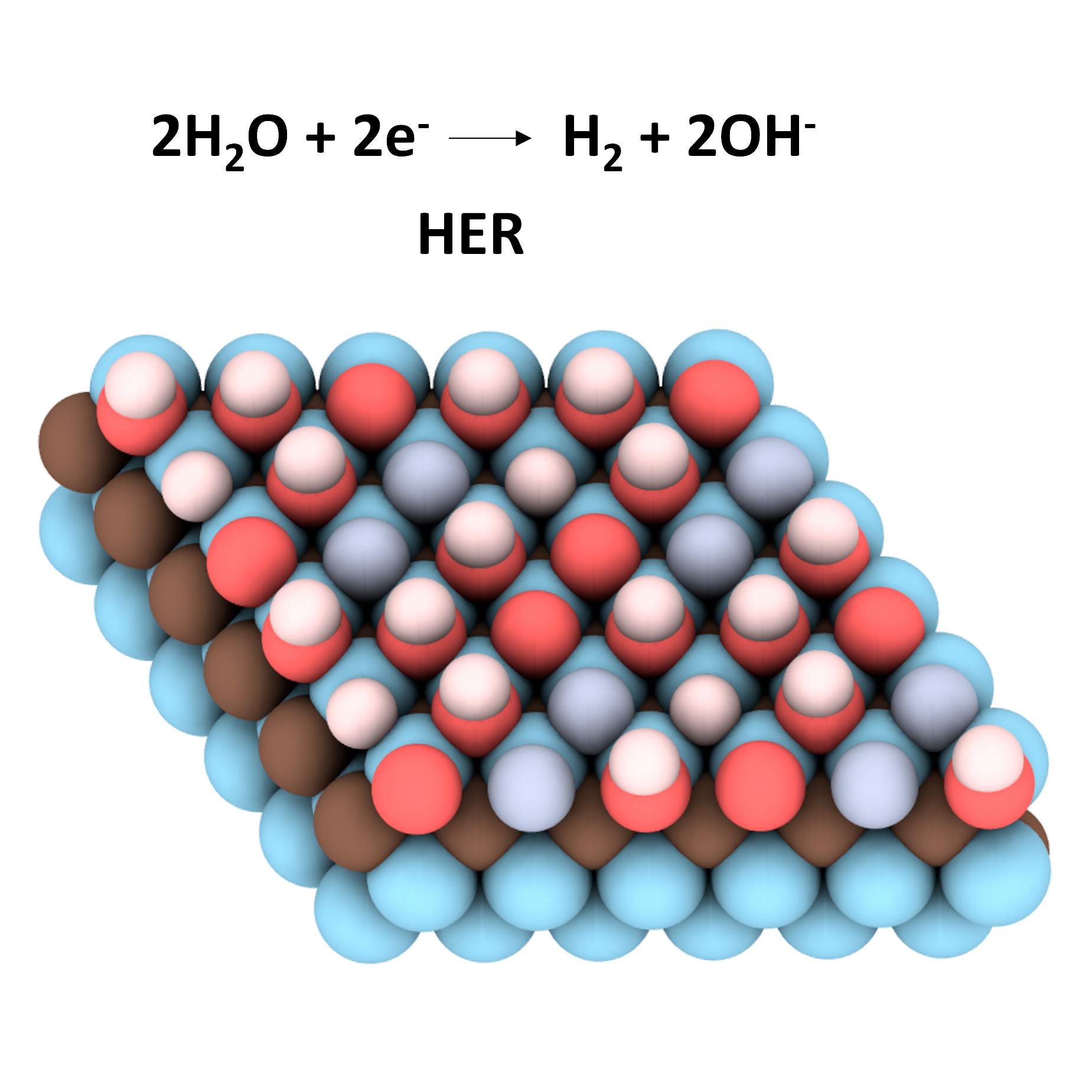
Theoretical study of electrocatalytic processes including the Hydrogen Evolution Reaction (HER), Oxygen Evolution Reaction (OER), Oxygen Reduction Reaction (ORR), CO2 reduction (CO2RR), and nitrogen reduction (NRR) using MXenes, carbides, supported single atoms, and metallic and bimetallic systems as electrocatalysts.
Heterogeneous catalysis
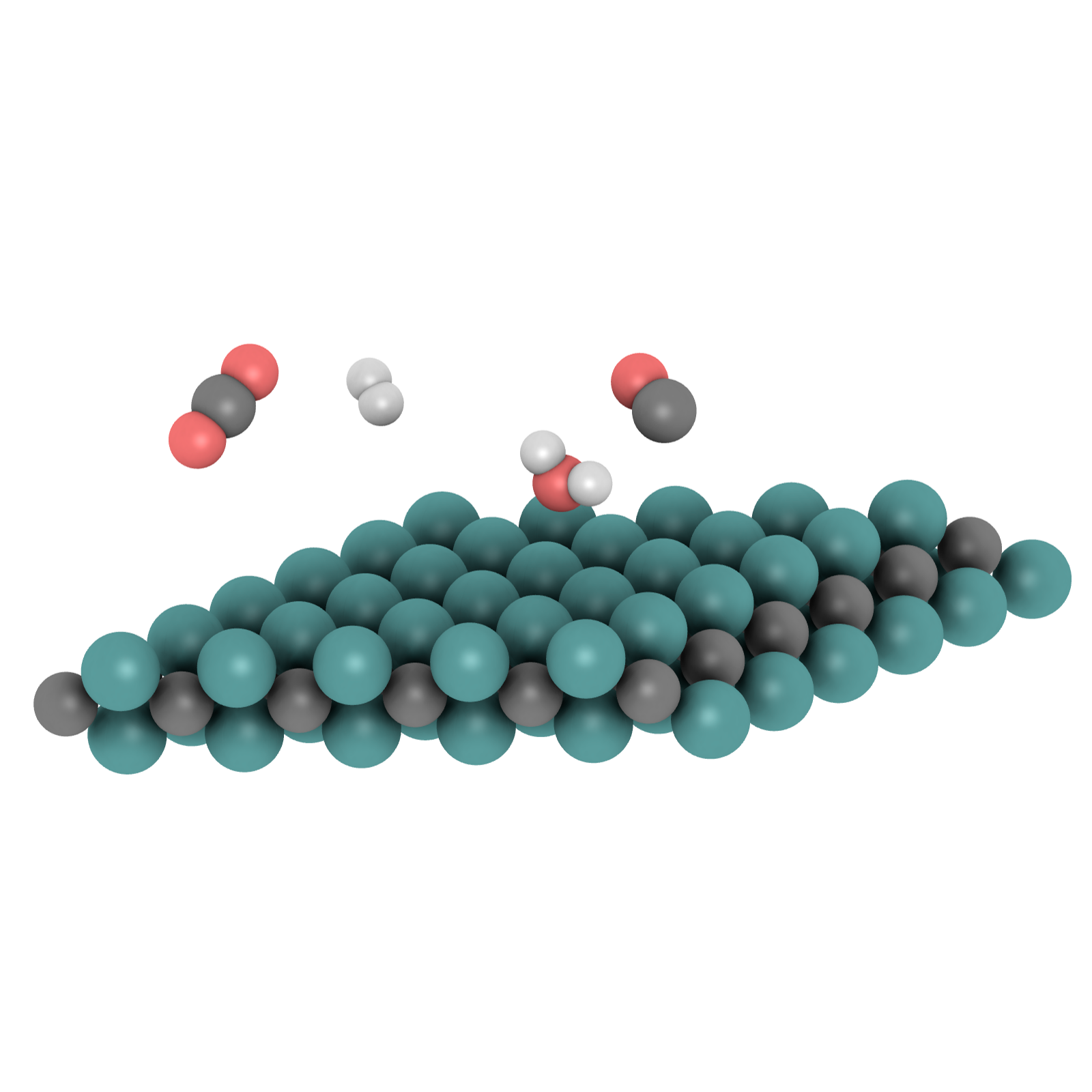
Theoretical and computational study of heterogeneously catalyzed processes using density functional theory-based calculations complemented with multiscale analysis using microkinetic and kinetic Monte Carlo simulations. The systems of interest include bulk carbides either as catalysts or supports and increasingly focus on two-dimensional (MXenes) carbides/nitrides as catalysts for the capture and transformation of CO2 into other useful chemicals (CO, CH4, CH3OH, and also C2 compounds such as ethanol). Other systems of interest are metal surfaces and nanoparticles, including bimetallic systems.