
Research
Computational Chemistry
Our aim is the study of small compounds and molecular systems to characterize their physicochemical properties, the formation of noncovalent interactions, and the involvement in reactive processes. In this context, we are interested in reduced models of biomolecular systems, including the influence exerted by the environment on the modulation of chemical properties. We are also interested in the mechanistic events that dictate the outcome of complex reactions. Finally, we also aim to identify structure-property and structure-activity relationships.


Chemical synthesis
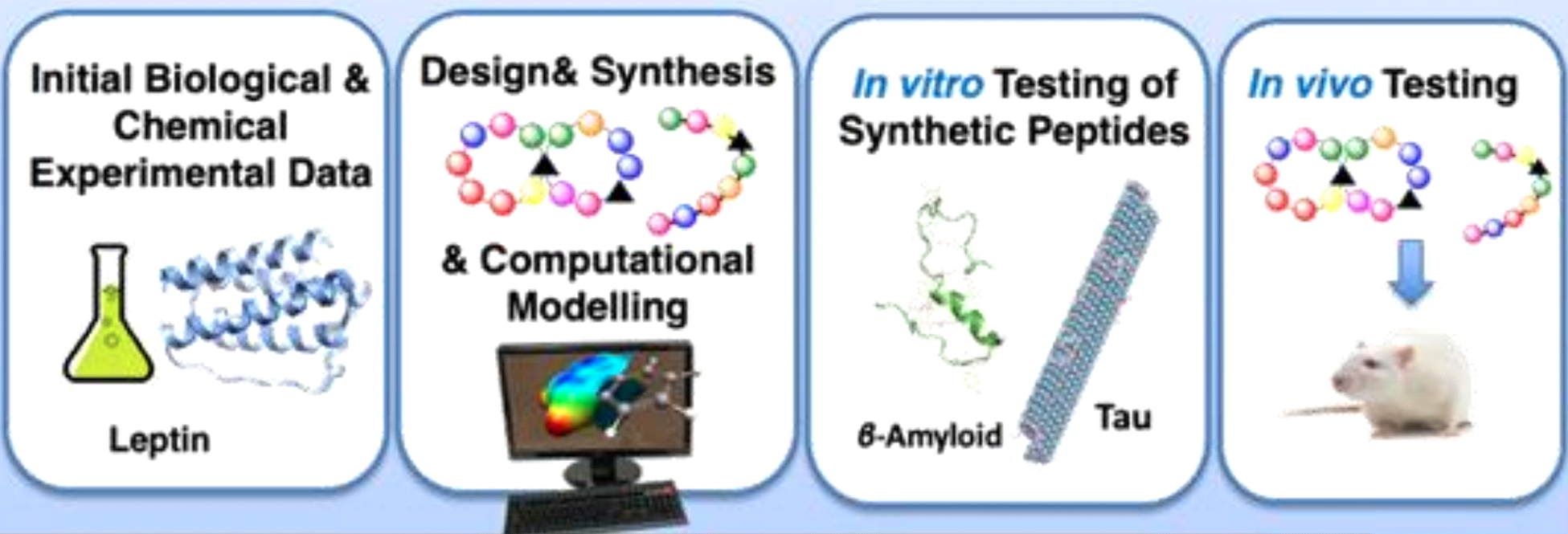
Our expertise in organic synthesis pursues the design and synthesis of new bioactive molecules as potential therapeutics for the treatment of neurodegenerative and diet-related diseases. The main approach relies on the design and synthesis of peptides and peptidomimetics, exploiting natural amino acids and nonnatural analogues towards novel therapeutics, pursuing efficacy, selectivity and synthesizability
Computational biology
Our aim is to translate the knowledge about key properties of molecules to the interaction with macromolecular targets and the regulation of the biological response, emphasizing the exploitation of this knowledge in drug design. This interest has been focused on distinct scientific areas, which include the study of spectroscopic and photoinduced processes (light harvesting and excitation transfer in photosynthesis) in proteins, the development of multitarget compounds targeting neurodegenerative diseases, the design of bioactive compounds against infectious diseases, and the role functional alterations in the gut microbiome on metabolic and cardiovascular diseases.


Biophysical studies
Our goal is to design new therapeutic tools to target diseases associated to ‘undruggable’ targets, which cannot be approached using conventional drug discovery. To this end, we have implemented a multidisciplinary computational-experimental strategy for the design of novel compounds suitable for targeted protein degradation, including the expansion of the toolbox of E3 ligases and the design of PROTACS (PROteolysis TArgeting Chimeric) molecules.
Food chemistry
Computational gastronomy is an emerging discipline placed at the data analytics–gastronomy interface. In this context our aim is to analyze the relationships between ingredients and food-processing techniques. In addition, we are also interested in exploring the linkages between gastronomy and health sciences, looking at the impact of dietary patterns, functional foods and the use of food waste on health and sustainability.


