
Presence of the blue dragon (Glaucus atlanticus) on the Catalan coast
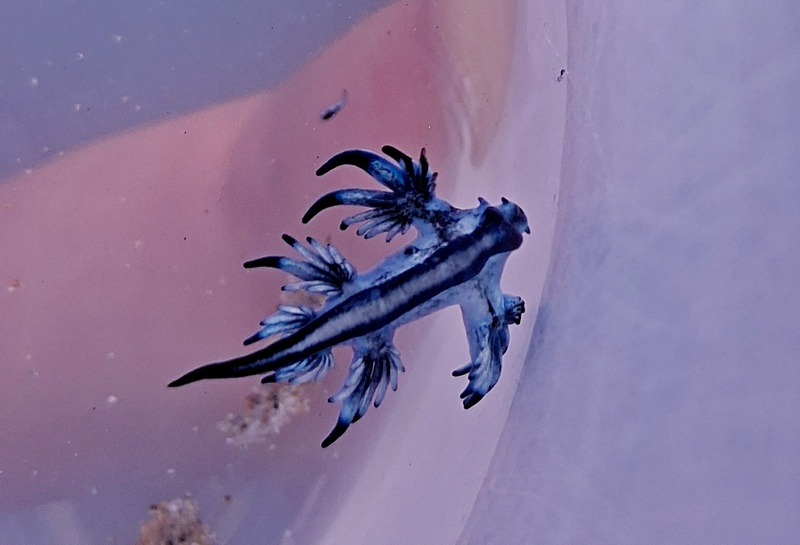
This September, the presence of the nudibranch Glaucus atlanticus, popularly known as the blue dragon, has been confirmed for the first time in Cala Jovera de Tamarit (Tarragonès). The observation has been reported by the Rural Agents of Tarragonès, who received the notice from the Red Cross on September 14. The specimens, located on the sand, have been collected and preserved for later analysis.
Dr. Manuel Ballesteros, researcher at the Biodiversity Research Institute of the University of Barcelona and professor emeritus of the Department of Evolutionary Biology, Ecology and Environmental Sciences, has expressed the interest of his research group in studying these specimens that will be transferred to the University of Barcelona to be studied. Rural Agents have also been asked to provide registration data (location, date and collector) and, if possible, photographs of the individuals.
Glaucus atlanticus is a nudibranch, a pelagic species with a cosmopolitan distribution in temperate and tropical waters of all seas that feeds on stinging cnidarians such as the Portuguese man o' war, and can accumulate its nematocysts in its papillae, which makes it potentially dangerous for swimmers. However, Dr. Ballesteros believes that, with correct environmental education and signage, it would not be necessary to close beaches due to the occasional presence of this species, as is not the case with other common stinging species such as spider fish. However, it is recommended not to touch these animals whether they are in the water or on the sand.
This observation reinforces the importance of coastal surveillance, citizen observations and collaboration between institutions to better document and understand the marine biodiversity of the Catalan coastline, especially in a context of climate change and alterations in ocean dynamics.