News & Events

2025 year in review
As 2025 winds down, it’s the perfect moment to look back at this year’s outputs and events coming out from the project. Missed it? You can now catch up: A public version of the microsimulation model is now available. We launched our public consultation on Lifecycle Notional Accounts Publications Around the world Wishing everyone a happy holidays!

The cost of parenthood: Men with children spend an extra hour on household chores
Last month, results from this paper Lifecycle analysis of the gender gap in paid and unpaid work by household structure were featured in the Spanish newspaper, La Vanguardia. When comparing couples with and without children, it is observed that the former work longer hours than the latter: an average of 14.7 hours per day compared…

How Ageing and Migration Affect European Economies: An Analysis Using European National Transfer Accounts
On 19-21 November 2025, Bernhard Binder-Hammer from the Vienna Institute of Demography (OEAW) team presented this poster at the Wittgenstein Centre Conference on Demographic Perspectives on Migration in the 21st Century

The Impact of Ageing, Socio-economic Differences and the Evolution of Morbidity on Future Health Expenditure – a Dynamic Microsimulation
Researchers from the WIFO team have released a new publication about the impact of population ageing on healthcare expenditure. They use dynamic microsimulation to project healthcare expenditure in Austria and disentangle the effects of changes in longevity, population age-structure, healthy life years and socio-economic health disparities. By combining price weights for healthcare services with information…
Doing better for families
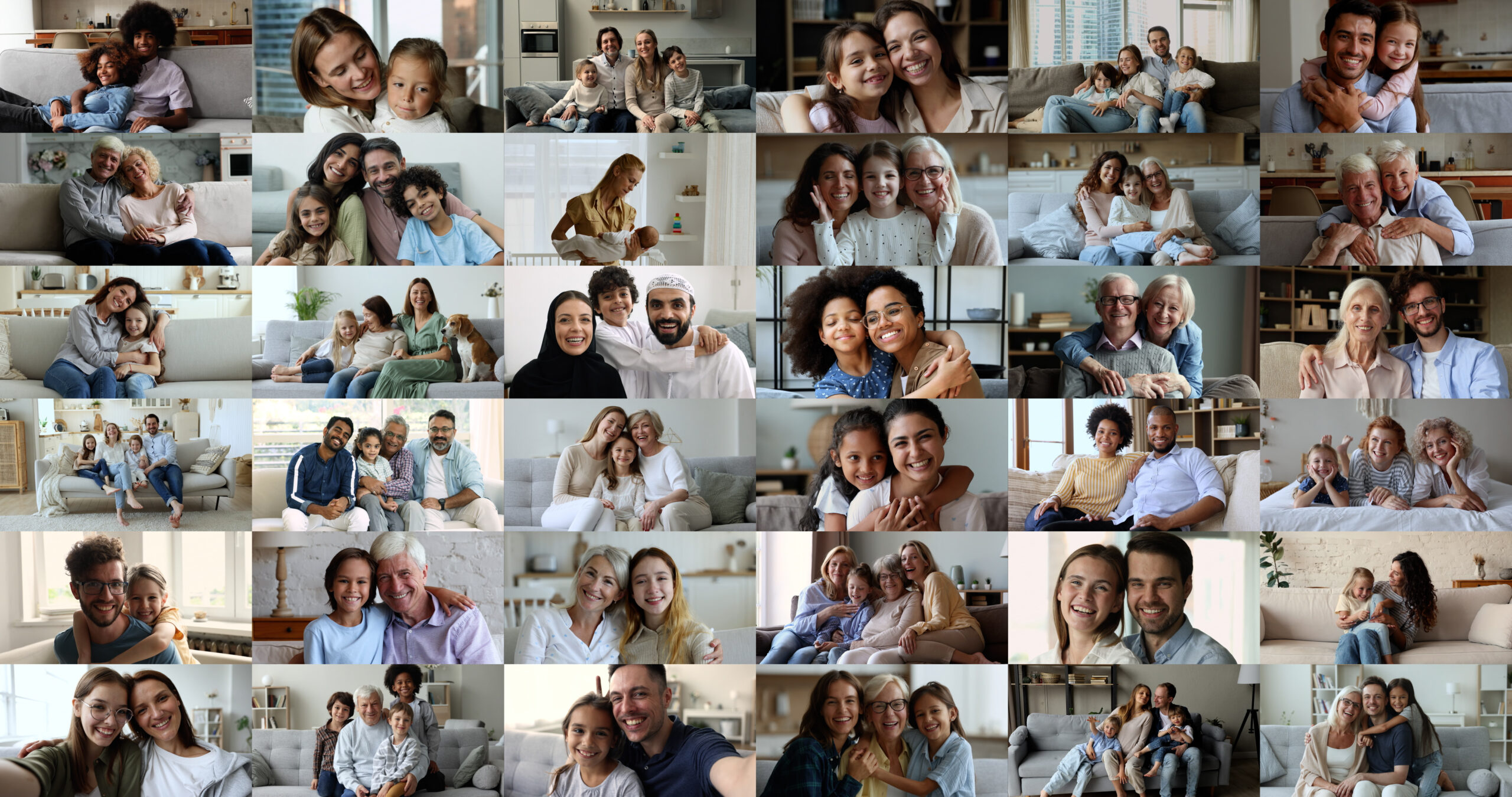
Held annually on 15th May, the International Day of Families (IDF) was established by the United Nations (UN) in 1993 (A/RES/47/237) to raise awareness among policymakers, experts and the general public of the problems and needs faced by families around the world and of effective ways of meeting those needs. This year, the UN highlights the vital role…
Intergenerational arrangements on the European welfare model
This first Policy Brief provides a general introduction to the opportunities and challenges of an ageing population faced by the EU and the contribution that SUSTAINWELL will make in the development of policy thinking. It is primarily intended – although not exclusively – to decision makers. It includes a general introduction to the research methodologies…

The first-ever EU Strategy on Intergenerational Fairness
The European Day of Solidarity between Generations, which is celebrated today, 29th April, is a great opportunity to highlight the importance of understanding and cooperation among different age groups in building a fair and sustainable society and addressing an ageing population. SUSTAINWELL will contribute to that by analysing the structural changes needed on welfare states policies –…

NTA help to foster a better balance between family, market and government in approaching welfare
SUSTAINWELL coordinator, Prof. Cio Patxot and researchers, Gemma Abio (UB), Guadalupe Souto (UAB), Robert Gal (HDRI) and Bernhard Binder-Hammer (OEAW) attended last week the 15th Global NTA Meeting on Population and the Generational Economy. SUSTAINWELL researchers participated and presented their research in: The project coordinator was also invited to partake in the Bridging NTA to National Inclusion Accounts…

Gender income gap in the EU
The ILO has estimated that the gender income gap – which is the ratio of women’s to men’s labour income – is 62,3% in 2024 and has only changed minimally over the last decade. Source: Own elaboration based on ILO modelled estimates, March 2025 Within SUSTAINWELL, we take a wider perspective of the gender gap in a lifecycle perspective…

Closing the gender gap in SUSTAINWELL
This year marks the 10th anniversary of the International Day of Women and Girls in Science (IDWGS) established on 22 December 2015 by the United Nations General Assembly. It is an awareness day to emphasise the need for gender equality in science and to achieve the 2030 Agenda for Sustainable Development and its 17 Sustainable Development Goals (SDGs). For this year, the…

SUSTAINWELL and the SDGs
On 25 September 2015, all United Nations Member States adopted a new Sustainable Development Agenda which provides a framework to end poverty, protect the planet, and ensure prosperity for all by 2030. It outlines 17 goals with the greatest challenges of the 21st century requiring deep structural, regulatory and behavioural transformation. Every year, the UN…

Interview with James Sefton: there is more solidarity between generations than the “Millennials versus Boomers” narrative would suggest
James Sefton, Chair in Economics – Academic Director for MSc Finance & Accounting, MSc Financial Technology and MSc Investment & Wealth Management, talks about intergenerational solidarity, wealth booms and debt burdens. Click here to watch the video