

In Crisis: An Anthropology Podcast
How does social anthropology understand the concept of crisis? In En crisi, through interviews with researchers and experts from various disciplines, we will explore the multiple dimensions of this phenomenon, delving into some of the most pressing contemporary issues. This podcast, created by the Anthropology of Crises and Contemporary Transformations Research Group (CRITS), will address complex processes of social change with rigor and sensitivity, including topics such as the migration crisis, the state of rural areas, the rise of populism, and population aging, among many others.
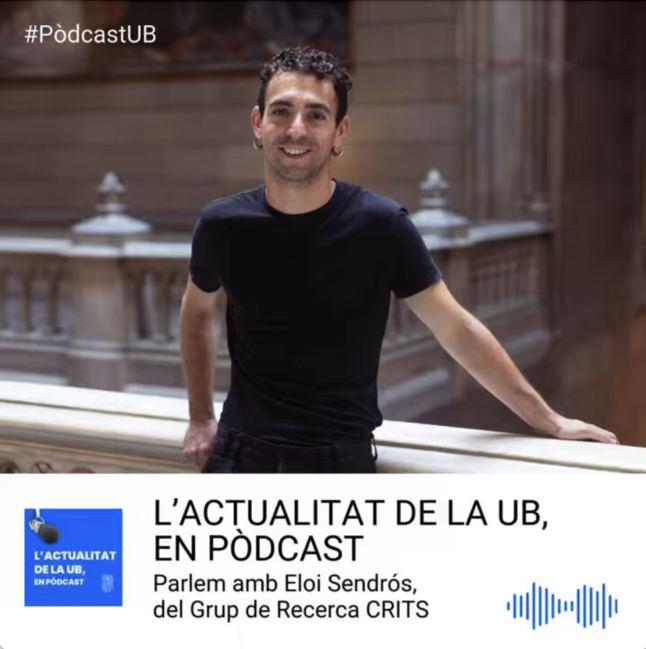
Eloi Sendrós, as the host, will guide us through these issues, offering a critical, multidimensional perspective on current crises.
Available in:
 Spotify
 Ivoox
Ivoox Apple Podcasts
Science, polycrisis, and the economies of the future, with Violeta Argudo Portal (March 2026)
In this episode, we discuss the production of knowledge in the biomedical field from the perspective of the anthropology of science, drawing on the work of Violeta Argudo Portal. We talk about the construction of regimes of value in science and the political economy of scientific knowledge production, based on an ethnographic approach to biobanks, cancer research, and assisted reproduction.

The crisis of justice, with Raúl Márquez and Agustín D’Onia (January 2026)
In this episode, we discuss the short circuits, contradictions, tensions, and limits of the criminal and civil justice system, drawing on the work of anthropologists Raúl Márquez and Agustín D’Onia, who have ethnographically explored situations of dissatisfaction that arise during legal cases and in their resolution.

The Roots of the Far Right, with Mikel Aramburu (November 2025)
Anthropologist Mikel Aramburu, a researcher in the CRITS research group and a member of the Department of Social Anthropology, examines the factors driving the rise of right-wing preferences among working-class communities. He does so by analyzing redistributive policies and their limitations within a context of growing inequality.

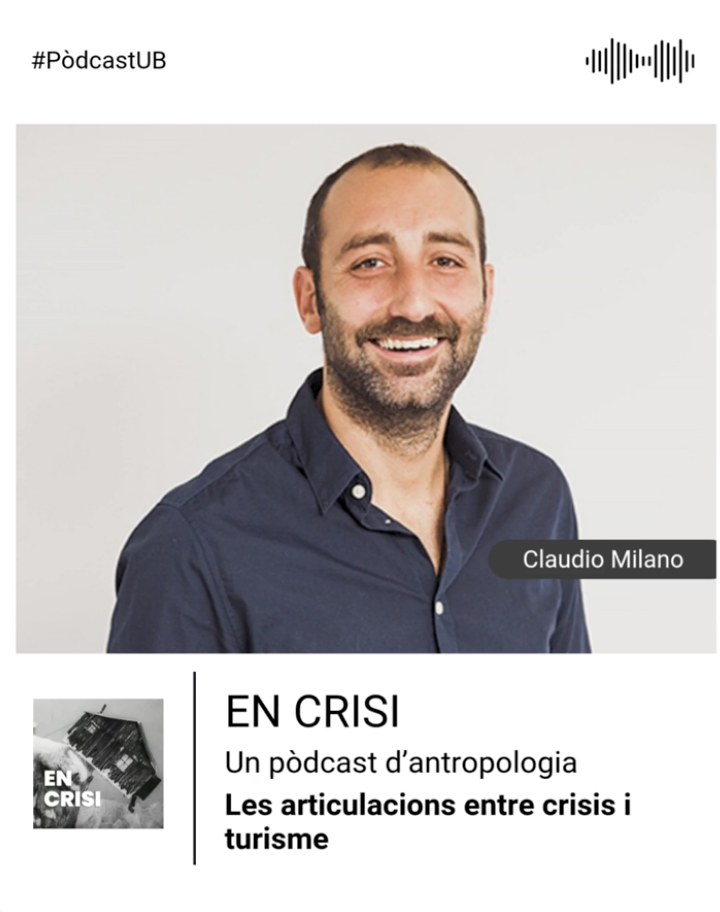
The joints between crisis and tourism, with Claudio Milano (July 2025)
In places like Catalonia, and especially in cities like Barcelona, the contradictions and frictions arising from tourist overload tend to become more evident during the summer. However, how are crises and tourism related beyond the concentration of people in a given place and time?
We explore these complexities with Claudio Milano, a professor at the Department of Social Anthropology at the UB and an expert in anthropology and the political economy of tourism.
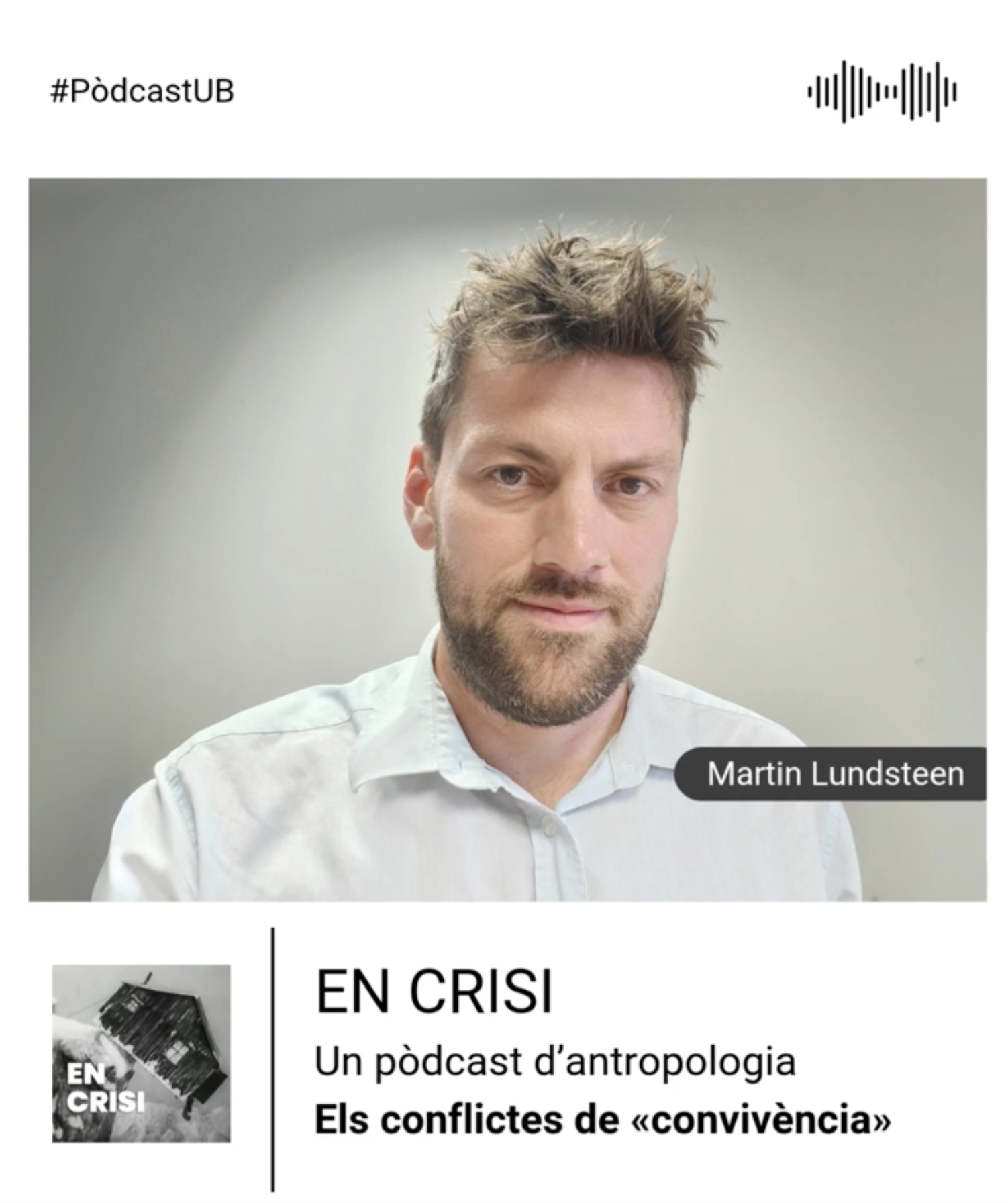
“Coexistence” conflicts, with Martin Lundsteen (June 2025)
In this episode, drawing on various studies carried out in Catalonia, anthropologist Martin Lundsteen explains how situations and conflicts shaped by economic inequalities, urban segregation, and institutional racism are framed as conflicts stemming from cultural difference and labeled as “problems of coexistence.” We explore what lies behind this category to uncover what it hides and what it simultaneously conceals.
Martin Lundsteen is an anthropologist and Ramón y Cajal postdoctoral researcher at the University of Barcelona. He is a member of the Reciprocity Studies Group (GER), the Anthropological Observatory of Urban Conflict, and serves on the Editorial Board of Quaderns, the journal of the Catalan Institute of Anthropology.
Migration crises through the lens of (im)mobilities, with Diana Mata Codesal (May 2025)
In the May episode of the podcast, in light of the growing prominence of political and media narratives around “immigration and its problems,” we take a critical look at migration, (im)mobilities, and the processes through which difference and alterity are constructed, together with anthropologist Diana Mata Codesal.
The conversation focuses on how migration discourses are shaped and how they influence who is allowed to move and under what conditions. The so-called migration crises are also examined through the lens of (im)mobilities, highlighting the inequalities that govern human movement and the mechanisms that produce both privileged mobility and forced immobility.
The episode offers a perspective that helps to understand migration as a complex phenomenon, deeply connected to broader social, economic, and political dynamics—beyond simplified or alarmist representations.

The Care Crisis, with Sílvia Bofill (April 2025)
This seventh episode of the podcast En crisi addresses a fundamental yet often overlooked issue: the unequal distribution of care work and its social, economic, and gender-related implications.
In our current context, families – and especially women – continue to bear the primary responsibility for caregiving tasks. This burden is carried out mostly within the domestic sphere and, in 85% of cases, is unpaid. It is essential work for the maintenance of everyday life, yet it often goes unrecognized both socially and institutionally.
What are the consequences of this situation? What happens when this invisible work does not receive adequate support from public policies? How does it affect women’s access to the labor market? And what are the social, emotional, and personal costs of this structural inequality?
To reflect on these questions, we speak with Sílvia Bofill, anthropologist and professor at the Faculty of Geography and History at the Universitat de Barcelona. Through her perspective, we explore how care dynamics reveal deep asymmetries in the distribution of time, labor, and social recognition.

The Housing Crisis, with Irene Sabaté Muriel (March 2025)
In this sixth episode of the podcast, the discussion focuses on the various expressions and manifestations of the housing crisis, with particular attention to its gendered effects. This analysis is carried out with Irene Sabaté, a professor in the Department of Social Anthropology at the Universitat of Barcelona.
In the first part, the conversation traces her research trajectory, from her initial fieldwork in Berlin to the publication of her latest book, Un lugar donde volver. Mujeres en lucha por una habitación propia. The discussion explores the processes of commodification, privatization, and financialization of housing and how it has become one of today’s most pressing social issues. From an anthropological perspective, the study challenges static definitions of housing, adopting a relational and processual approach that goes beyond the idea of a home as merely a roof and four walls, highlighting its multiple social and vital functions.
Moreover, from a feminist perspective, the interconnections between housing, labor, and care work are analyzed, along with the changing residential conditions of domestic groups throughout their life trajectories. Finally, the discussion explores how the surrounding environment shapes the perception of housing as a home, either facilitating or hindering this process.

Discussing about the rise of the new right-wing movements with Pablo Semán and Alejandro Gorr (February 2025)
The rise of so-called “new right-wing movements” has become a global phenomenon, with different expressions depending on the national context. While they share certain strategies and rhetoric, each case presents its own dynamics that must be analyzed in depth. This was the starting point of our conversation with anthropologist Pablo Semán, in which we explored the rise of Javier Milei in Argentina and the key factors behind his political ascent. Why have movements like La Libertad Avanza managed to attract the support of working-class sectors that were traditionally distant from such proposals? What role do economic crisis, job insecurity, and social discontent play?
To delve deeper into these questions, we were also joined by sociologist Alejandro Gorr, who provided his perspective on the political and social transformations that have facilitated this shift. Together, we analyzed how material living conditions influence the formation of new political identities and the adoption of a discourse that challenges traditional institutions. An essential debate for understanding the tensions and challenges posed by the expansion of the new right-wing movements worldwide.

Food risk with Cristina Larrea (January 2025)
In the third episode of the podcast, we ask: Is our food safe? How do the chemicals present in food affect us? What risks arise from their consumption? Cristina Larrea, Professor of Social Anthropology, analyzes the toxicity chain that accompanies food, from its production to its consumption. This chain not only impacts the environment but also deeply affects the health of producers and consumers.
In addition, we address the economic and political factors that perpetuate and even encourage the use of toxic chemicals in food production processes. We reflect on how these dynamics sustain practices with severe consequences for both the environment and the human body, particularly impacting the most vulnerable communities.

Is the Rural World in Crisis?, with Camila del Mármol (November 2024)
In the second chapter of ‘In Crisis’, we delve into the profound transformations taking place in peripheral rural and mountainous regions, and analyze the social, economic, and environmental challenges they face. Furthermore, we will explore the various responses emerging in these areas as reactions to this new reality, serving as mechanisms of adaptation and resistance in the face of the difficulties posed by this crisis context.
To deepen our understanding of this topic, we will have a conversation with Camila del Mármol, professor in the Department of Social Anthropology and a member of the CRITS research group, who is currently co-directing a research project focused on the political transformations occurring in the Catalan Pyrenees, with the aim of understanding the social and territorial processes shaping this region.

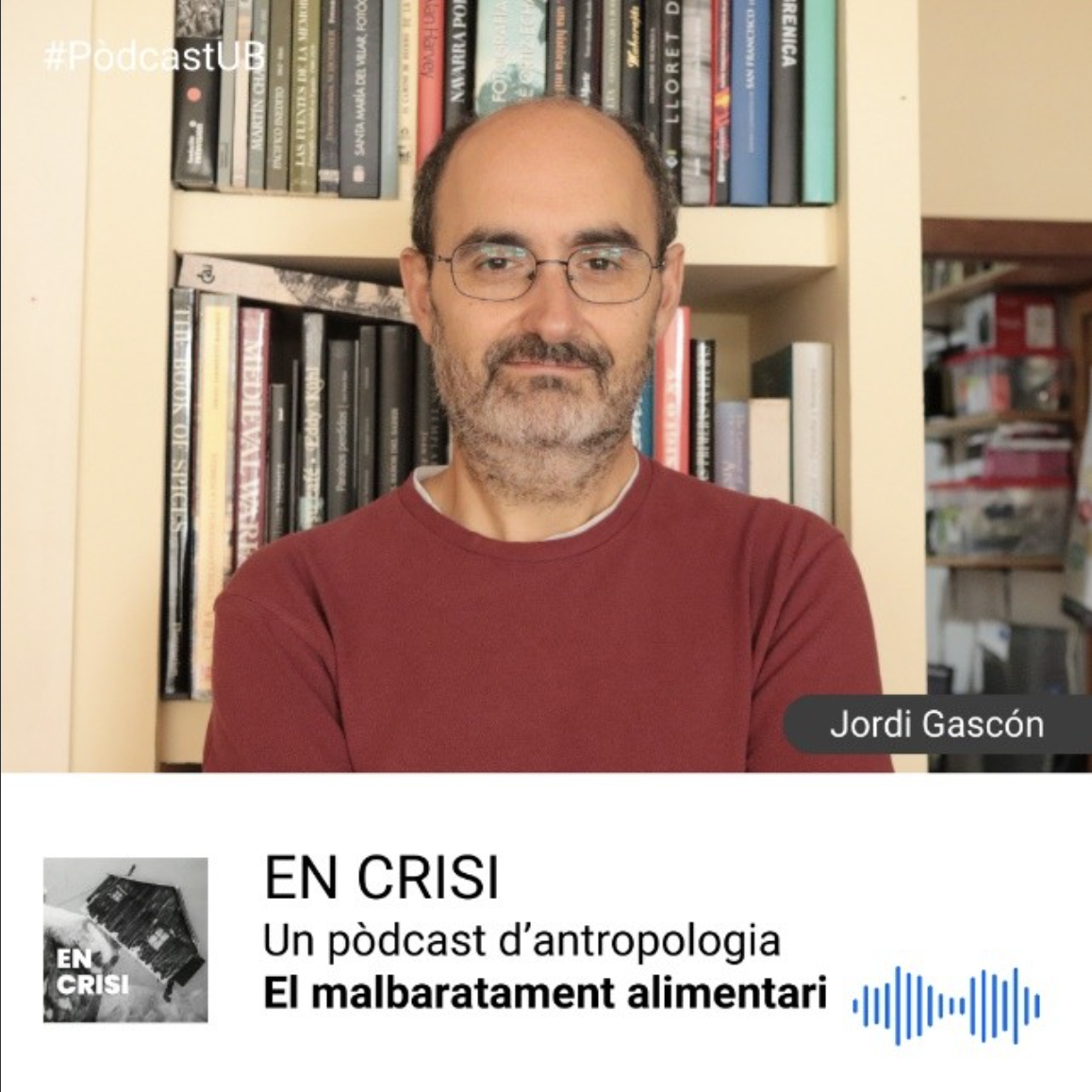
We discuss food waste with Jordi Gascón (October 2024).
In the first episode of En crisis, we begin a series of chapters that will thoroughly explore the various agrarian transformations, as well as the realities and challenges faced by rural and mountain areas, with a special focus on the agro-productive sector. In this episode, we are joined by Jordi Gascón, a professor in the Department of Social Anthropology and a member of the CRITS research group, to discuss food waste—a highly relevant issue today.
Far from being primarily caused by organizational or technological issues, this phenomenon originates in the deep inequalities that permeate the entire food production and distribution system. These inequalities shape the current landscape of waste, making it essential to address the issue from a structural and social justice perspective.
We discuss crises from the perspective of social anthropology (September 2024).
How does social anthropology understand the concept of crisis? Eloi Sendrós, a researcher with the Anthropology of Crises and Contemporary Transformations Research Group (CRITS), explains that crises are complex processes of social change. En crisis, the podcast series created by his research group, will address some of these processes with both rigor and sensitivity: from the migration crisis to the rural world crisis, as well as topics like populism and population aging, among many others.
Available in:
This podcast is produced with the support of the “Nous formats” program by the Communication Unit at the University of Barcelona.
Production team: Jordi Gáscon, Claudio Milano, João França, Ainhara Del Pozo, and Eloi Sendròs.