
Ongoing projects
Patrimonialization and musealization of memories. Comparative ethnography of sites of memory in Chile, Argentina and Spain (PAMM)
31/03/2025–31/03/2029 Patrimonialization and musealization of memories. Comparative ethnography of sites of memory in Chile, Argentina and Spain (PAMM)
Programme: Fondo Nacional de Desarrollo Científico y Tecnológico (FONDECYT)
Code: 1250099
Funding body: Government of Chile
Amount: $235,018,000 (€2,292,834.7)
Principal Investigator: Javiera Bustamante Danilo / co-PI: Alejandra Canals

Pyrenean Network for Innovation and Creative Management of Cultural Heritage (PATRIM 4.0)
01/06/2023–01/11/2026 Pyrenean Network for Innovation and Creative Management of Cultural Heritage (PATRIM 4.0)
Programme: INTERREG-POCTEFA Programme
Code: EFA127/01
Funding body: European Union
Amount: Total project budget: €540,000.00; Total UB budget: €57,981.12
UB Principal Investigator: Xavier Roigé. Other CRITS researchers: Alejandra Canals

Sustainable Rural Education Strategy
01/12/2023–30/11/2026 Sustainable Rural Education Strategy
Programme: Capacity Building
Code: I1PD000428
Funding body: Education, Audiovisual and Culture Executive Agency (EACEA), European Union
Amount: Total project budget: €820,000.00; Total UB budget: €121,525.00
UB Principal Investigator: Xavier Roigé. Other CRITS researchers: Alejandra Canals, Jordi Gascón, Camila del Mármol

Medicines shortages configurations: understanding pharmaceutical supply chains interdependencies, vulnerabilities, and anticipatory strategies (MEDSHORT)
2026–2028 Medicines shortages configurations: understanding pharmaceutical supply chains interdependencies, vulnerabilities, and anticipatory strategies (MEDSHORT)
Programme: Marie Skłodowska-Curie Actions
Code: 101208078
Funding body: European Union
Amount: €315,440.64
UB Principal Investigator: Violeta Argudo

Work and power dynamics: explanatory keys to the legitimation and social contestation of tourism in sun-and-beach destinations (TURYCONTEST)
2024–2027 Work and power dynamics: explanatory keys to the legitimation and social contestation of tourism in sun-and-beach destinations (TURYCONTEST)
Programme: State Plan for Scientific and Technical Research and Innovation. Knowledge Generation Projects
Code: PID2024-159363NB-I00
Funding body: Ministry of Science, Innovation and Universities
Amount: €86,600.00
UB Principal Investigator: Claudio Milano (and Alejandro Mantecón, University of Alicante)

Political ecology of health: the chemical colonization of pesticides as a producer of toxic bodies and territories
Project code: PID2024-155523NB-I00
Principal investigator (PI): Cristina Larrea Killinger
CRITS members: Ferran Estrada and Violeta Argudo
Funding body: General Knowledge Programme 2024
Funding: €95,500
Project period: 2025–2028
More information: https://www.ub.edu/toxicbody/es/
Study on the impact of caregiving on the physical, mental, emotional, and economic health of mothers of sons and daughters with intellectual disabilities who engage in prolonged caregiving.
2025-2026, PI: Bofill-Poch, Sílvia. Study on the impact of caregiving on the physical, mental, emotional, and economic health of mothers of sons and daughters with intellectual disabilities who engage in prolonged caregiving.
Grífols Foundation (BEC-2025-012). €6,000

Housing initiatives for older people: locally and community-based residential alternatives facing the challenge of the deinstitutionalization of care (ALTERCARE)
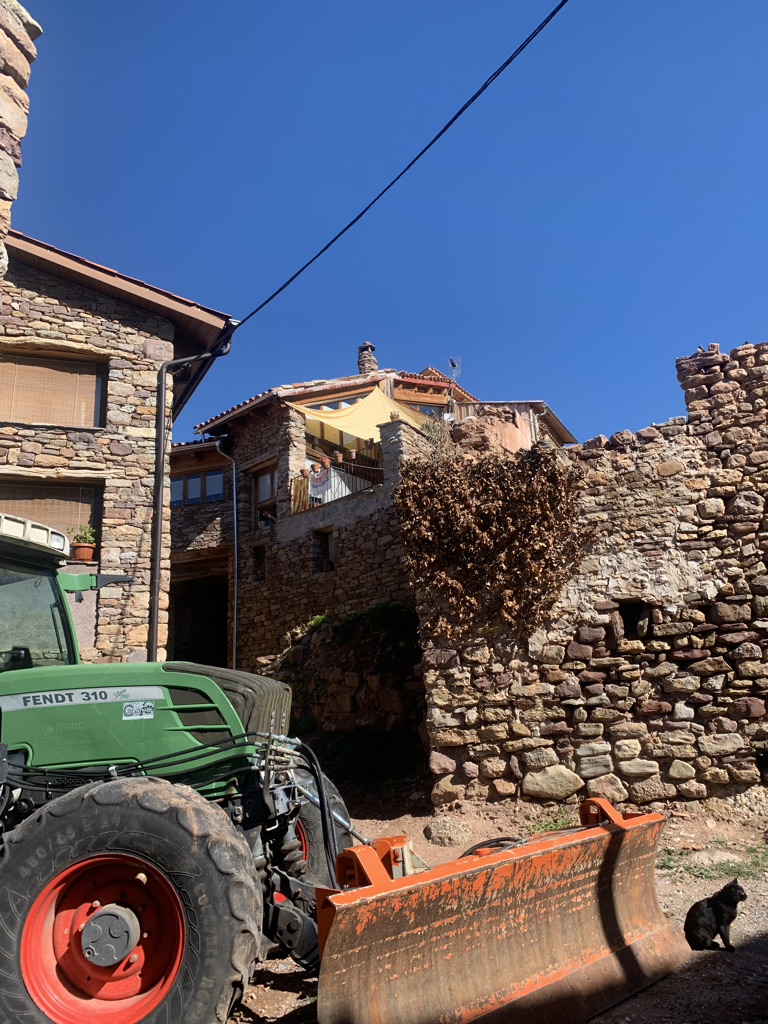
RURALEX: Knowledge in Crisis – The Dynamics of Environmental Expertise amidst Rural Change
The RURALEX project asks: How is people’s knowledge about the environment in rural parts of Europe changing, and how do such changes affect the social, cultural and ecological challenges currently faced by local communities? European rural areas have struggled in recent years with shifts in population and land use patterns, such as the out-migration of people to urban areas and the abandonment of traditional forms of agriculture. These moves have contributed to an urgent crisis: namely, that ecological expertise and awareness is rapidly changing, and in some cases being lost. This includes knowledge held both by everyday people (such as farmers or hunters) and by so-called “experts” (such as policy-makers or scientists). Examples include peasants’ controlled burning practices as a method of wildfire prevention, or the practice of building artisanal, single-log boats for river navigation along floodplains. While this crisis is often intangible and difficult to pinpoint, it is also deeply impactful to European lives and landscapes.
The 17 researchers working on the RURALEX project will study this phenomenon in diverse cases across Europe: the Spanish Pyrenees, the Italian Alps, former East Germany, the Estonian coast, Northern Finland, the Danube basin in Romania and Bulgaria, and the southeastern UK. We will carry out long-term research on the ground using qualitative research methods, such as interviewing and observing people, and studying archives and stories. We will also innovate new research methods of our own, including a creative mapping tool (which we call “multi-species deep mapping”) to gather and showcase the different memories, images, and sounds that tell the story of people’s relationships to the environment. By studying people’s intangible (implicit) and tangible (explicit) knowledge about their environments, we will show how long-held and recently acquired expertise can support the many challenges of rural communities. RURALEX will also show how humanities disciplines such as anthropology and history are important for understanding and addressing urgent social and ecological issues that will greatly impact the future of Europe.
Keywords: knowledge, expertise, rural, agriculture, multispecies, nature-based livelihoods, societal disenfranchisement.
Consortium:
Project Leader: Roger Norum, University of Oulu, Finland
Alessandro Rippa, University of Oslo, Norway
Stefan Dorondel, The Institute for Southeast European Studies, Romania
Camila del Mármol, University of Barcelona, Spain
Kadri Tür, Tallinn University, Estonia
Alice Eldridge, University of Sussex, United Kingdom
Project details:
Start date: 1 May 2025
Project duration: 36 months
Project budget: €1,499,663
Funding organisations:
Arts and Humanities Research Council (UK)
Estonian Research Council (Estonia)
Ministerio de Ciencia e Innovación (España)
Academy of Finland (Finlandia)
The Research Council of Norway (Noruega)
UEFISCDI (Rumanía)
Associate partners:
Antoni Trasobares Rodríguez, Director, Forest Science and Technology Centre of Catalonia, Spain
Giuseppina Daniele, President, Vallarsa Ethnographic Museum, Italy
Helge Bruelheide, Director, Halle-Wittenberg Botanical Garden, Germany
Jordi Abella Pons, Director, Ecomuseu de les Valls d’Àneu, Spain
Liina Veskimägi-Iliste, Chairwoman of the Board, Estonian Folk Art and Craft Union, Estonia
Luis Ovidiu Popa, Director of Research, Grigore Antipa Natural History Museum, Romania
Pentti Marttila-Tornio, Group Leader, Kiiminki River Catchment Area Association, Finland
Sarah King, Rewilding Manager, Rewilding Britain, United Kingdom
Susanne Grießbach, Director, Haus am See Information Center for Environment and Nature Conservation, Germany
Sébastien Moncorps, Director, IUCN French Committee, France
Virginia Maria da Silva Neto, Director, Francisco de Lacerda Museum, Portugal
Project website: http://ruralex.eu/

Implications for migration policies, the exercise of rights, and transnational care in the post-pandemic era
Code: PID2023-148591NB-I00
Funding Entity: Knowledge Generation Projects, Ministry of Science, Innovation, and Universities
Duration: September 1, 2024 – June 30, 2027
Amount: €71,250.00
Principal Investigator: Antía Pérez Caramés
Research Team Member: Diana Mata-Codesal
Photo: UN Women/Staton Winter
To what extent has essentiality become consolidated as a new form of regulation of citizenship status? To what degree is this a continuation, and to what degree a rupture, from previous measures of rights attribution? How is it articulated within the framework of intersecting inequalities of class, gender, and origin? What are the implications of this for the development of their work and the exercise of their rights? How is the discrepancy between institutional framing and the individual and collective experience of essential work expressed? What forms does the social reproduction of migrant essential workers take in the post-pandemic context? How are labor relations structured in essential occupations performed by migrant women?

Tensions between the right to housing and private property in lease relationships. A socio-legal approach (TEVIPROP)
Reference: PID2022-138661NB-I00
IP: Irene Sabaté (University of Barcelona) and Marco Aparicio (University of Girona)
Period: 2023-2026
Funding: €72,250
Description:
The project Tensions between the right to housing and private property in rental relationships. A socio-legal approach (TEVIPROP) will involve the collaboration of an interdisciplinary team, bridging the fields of Social Anthropology (IP Irene Sabaté, University of Barcelona) and Law (IP Marco Aparicio, University of Girona), with contributions also from other disciplines of social sciences.
The main objective is to understand the actors, discourses, and practices involved in the tension between private property and the right to housing in the rental market, in order to identify the obstacles currently hindering the achievement of the right to housing, within the framework of fulfilling the social function of property. To achieve this goal, the study will focus on two phenomena: discrimination against certain groups in accessing rental housing and unauthorized occupations of vacant housing. These issues will be addressed through a qualitative methodology that combines:
- Ethnography: through interviews, focus groups, and case analysis of conflicts within rental relationships in urban areas of Catalonia.
- Legal analysis: of legislation, doctrine, and jurisprudence from a comparative perspective, to generate relevant knowledge for the design of public policies and the reformulation of the regulatory framework, as well as inspire forms of self-defense of rights.
Ultimately, the aim is to generate an impact on society, contributing to the guarantee of the right to housing and the social function of property, as well as a scientific impact, making contributions to current theoretical debates on the scope of property owners’ powers, the naturalization of property culture, the legitimacy or illegitimacy of different practices surrounding housing provision and the extraction of rents from it, the responsibilities of various public administrations in regulating the rental market in conjunction with guaranteeing rights, or the intersection of different inequality factors in the exercise of the right to adequate housing.